OPINION: Alcorn and Jackson State are ‘twisting in the wind’ and it could get worse
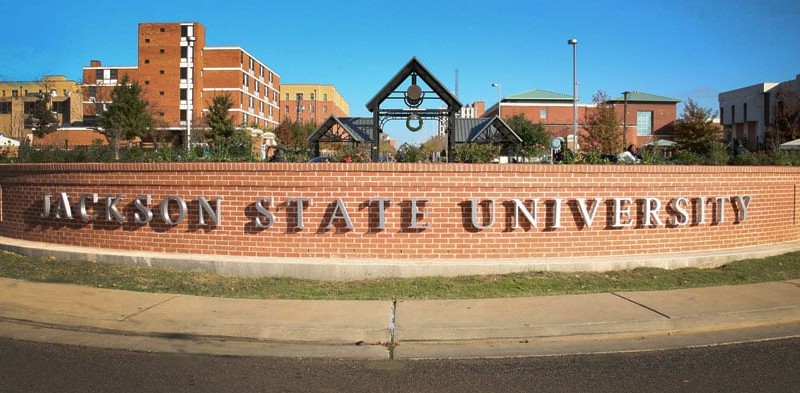
In August, the public was made aware that the search for a president of Jackson State University was on schedule, that the college board’s preferred candidate would be named in October, and that a new president would be seated January 1, 2024. It was further learned that the pool of candidates included more than 70 applicants. We are not sure whether there will be a president in place by January 1, but for sure there was no preferred candidate announced by October. As a matter of fact, the college board and/or the search committee met several times in September, October, and November but each time came away with no announcement. Based upon that secrecy or lack of communication, rumors began to fly. Several board members expressed concerns that such rumors would circulate. That, however, is the nature of the beast. Meanwhile, Dr. Elayne Hayes Anthony and JSU seem to be just twisting in the wind.
That same public posture is less apparent, however, regarding Alcorn State University, despite the fact it has been without a permanent president since Dr. Felecia Nave was apparently pressured out of the position last spring. There has not even been a search committee announced for Alcorn State’s position. Perhaps, JSU is just a case of the squeaky wheel getting the grease. It is time, nevertheless, for board action on Alcorn’s presidency as well.
The public is quite aware that JSU is undergoing a presidential change. The public, especially JSU alumni and faculty, also realize that this is now the eleventh presidential change since Dr. John Peoples was ousted by the board in 1984. On the quieter side, however, Alcorn has done them one better in an even shorter time span. Since 1994, Alcorn has had Drs. Rudolph Waters, Clinton Bristow, Malvin Williams, George Ross, Norris Edney, Christopher Brown, Norris Edney (again), Al Rankins, Donzell Lee, Felecia Nave, Ontario Wooden, and Tracey Cook as presidents.
Currently, like Hayes Anthony and JSU, Dr. Cook and Alcorn seem to be just twisting in the wind. The instability at Alcorn and Jackson State represents a loss of momentum and development that could otherwise be had if there were concerned, creative, competent presidents at the helms who can lead teams of concerned, creative, and competent faculty and staff. That, in fact, is the greatest rub – these universities, which have already been long neglected, are being stymied. The students deserve better, the faculty deserves better, and the community deserves better.
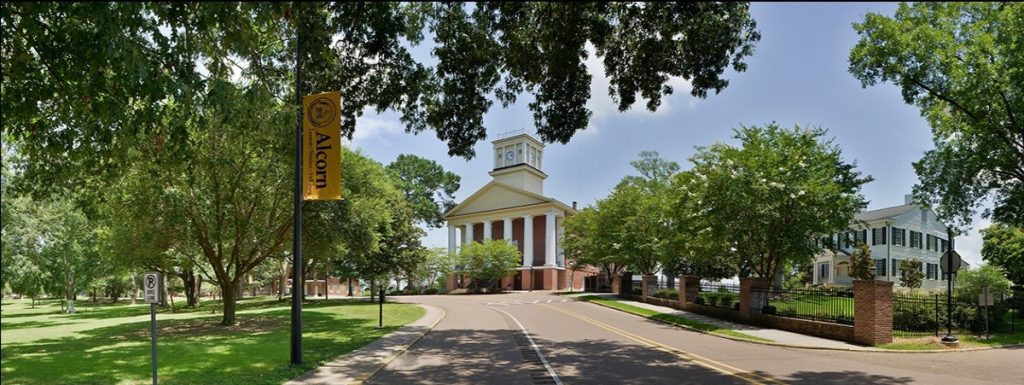
We realize that even as we try to make the case for Alcorn and JSU being pulled from their states of “suspended animation,” things could get worse. We take this position because there have been cases, especially at Jackson State, where the college board has appointed individuals who made matters worse either because the chosen presidents lacked sufficient concern, were not creative or competent, and in several cases were known to have had serious flaws from previous employment positions. It may be hard to believe, but the community consensus appears to believe that the board’s bad choices were deliberate.
In one case, an appointed individual publicly expressed that he was being sent to JSU to get rid of some troublemakers. In another case, it was known that the appointed person had been given a vote of no confidence by the faculty at their previous university. In yet another case, an individual was hired for JSU who had no college administrative nor HBCU experience. In a fourth instance, an individual who had been terminated elsewhere for incompetence was hired. Furthermore, individuals with apparently lacking and undesirable backgrounds were hired in two separate cases. These all seemed like cases of built-in failure or at least the expectations of such.
From the inception of their existences as state institutions, Alcorn in 1871, Jackson State in 1940, and
Mississippi Valley in 1950 have suffered from racially-biased treatment at the hands of the college board. An attempt was made to correct or overcome that condition through Ayers vs. Waller. While the case was won “on merit” in the Supreme Court, the remedy provided by the state and accepted by the district court left them in their same relative positions.
That was 1975 – 2021. Since that door has closed, the public Blackcolleges have been literally forgotten when it comes to equal treatment. They have been back on their own. Thus, Alcorn and Jackson State twisting in the wind over their presidencies is merely another part of the ongoing saga.
Author