Mississippians to march and rally to save HBCUs
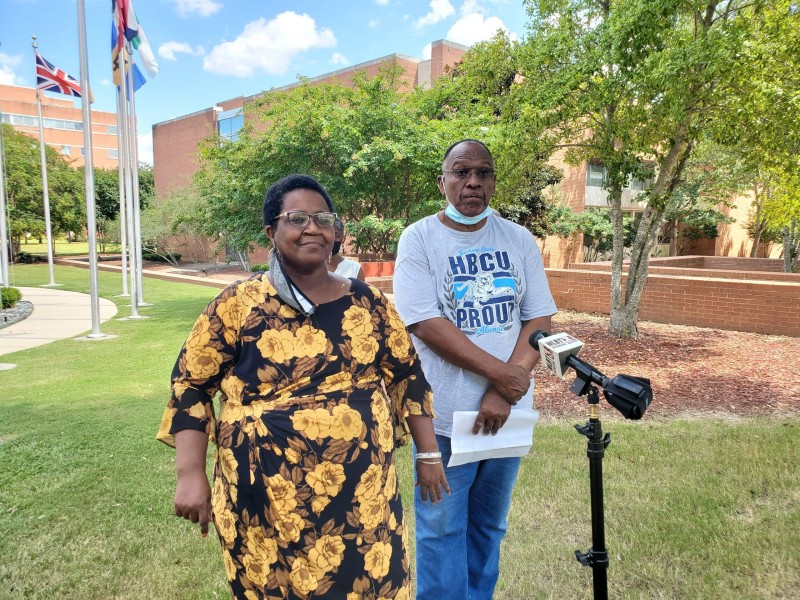
Plans have been made to stage a march and rally in support of Historically Black Colleges and Universities, with a focus on Mississippi’s Black universities, the impending crisis facing Black law schools, and on the production of Black doctors and other healthcare professionals. These plans have been in the making for several weeks and are now finalized.
On Saturday, August 14, 2021, the march will begin in front of the Masonic Temple on Lynch Street and proceed to the State Capitol on Mississippi Street. The march will start at 9:00 a.m. and once the marchers reach the state Capitol building, there will be a series of speakers.
Dr. James Douglas, former president and law school dean of Texas Southern University, is scheduled to speak on the new requirements that must be met if a law school is to remain functional as an accredited law school. Douglas is expected to talk about the threatening position in which the requirements place virtually every Black law school, except perhaps Howard University School of Law.
A second speaker who is being invited is Dr. Robert Smith, long-serving physician in Hinds County. Dr. Smith is expected to discuss the predicament of healthcare among Black people, raising questions about the disparities between the Black and white populations. He is also expected to emphasize the critical need for more Black doctors.
A third speaker who is excited about the idea of sounding the alarm about the dismal future of Black colleges and universities is Dr. Clenora Hudson-Weems, a noted researcher and author of some 14 books on this and related subjects. She is expected to discuss the currently promoted myth that predominately white universities do a better job of educating Black scholars than do historically Black institutions. She is also expected to link the Emmett Till lynching to much of the racist behavior directed against Black populations in colleges and elsewhere.
Attorney Alvin Chambliss, who successfully argued the case of Ayers vs. Fordice before the U.S. Supreme Court and who is the mastermind behind the march and rally, will also serve as one of the speakers.
Students, parents, faculty, alumni, and other supporters of Historically Black Colleges and Universities, and Black education in general, are urged to participate in the march and support the rally. Such an effort to draw attention to the threat facing Black colleges, universities, and professional schools is one that is long overdue.
There has long been a movement afoot to close or eliminate Historically Black Colleges and Universities. When it comes to Mississippi, as quietly as it is kept, many have been closed already. They include J. P. Campbell College, Mississippi Industrial College, Prentiss Institute, Natchez Junior College, Harris Junior College, Mary Holmes College, Okolona College, Saints Industrial Junior College, Utica Junior College, and the college division of Piney Woods Country Life School. Efforts were also made in the 1960s to eliminate Tougaloo College. In most cases, the institutions were quietly killed off and with the effort of state actors. That should not have been the case back then and can not be allowed to happen today.
It is true that most of the institutions named above were primarily private and junior colleges, but the effort has not and will not stop with them. There has frequently been talk of closing Mississippi Valley State University. Many of its programs have been lost amidst, and as a result of, such talk. On some occasions, the lost programs have been quickly seized by Delta State University and even Mississippi Delta Community College. Similarly, going back to the John Peoples administration, there have been efforts to downsize Jackson State University or even merge it into a University of Mississippi system. One official, at one point, proposed merging Alcorn, Jackson State, and Mississippi Valley State into one institution.
Enough of the nonsense. It is already beyond the time for strong Black men and women to step up and save the institutions that are our legacy and salvation. It is hoped that the march and rally on August 14th can be the beginning of a comprehensive, sustained drive to keep the issue before the public, with the end result being the re-vitalization of Historically Black Colleges and Universities nationwide.
Author