Leake County celebrates MLK Day and invests new NAACP officers
She’s come a long way from Los Angeles, but she hasn’t regretted a day since moving to Leake County to be near the family of her husband, James, who was experiencing some challenges associated with health and old age. It made more sense, she said, to move close to the family than to arrange unexpected emergency trips to deal with recurring crises.
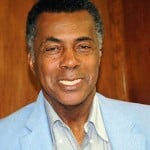
Alberlynne (Abby) Harris Woods, the newly-sworn-in President of the Leake County NAACP, attained her coronation Monday only one hour after leading the Martin Luther King Day March/Parade in the county.
Despite the frigid temperatures limiting the number of willing marchers in the parade, Woods did a masterful job of interviewing the drivers of the entire line of vehicles that took part in the festive commemoration.
After about her 20th interview, she closed the video recording session by saying, “Next year, I’m going to want to see a float. Maybe the management of Bryant’s Chicken Plant will present us with a huge chicken float next time.
KING DAY PROGRAM
The line up of the caravan of vehicles at Leake Central Junior High School was the leadoff event for the parade that began precisely at the 10:00 AM scheduled time, winding up in front of the Leake County Courthouse shortly before 11:00 AM. Inside the courthouse, the MLK program and NAACP new-officer installation proceeded without hindrance.
Outgoing president Courtney Body welcomed the newly elected officers as former Carthage Mayor Mary Ann Vivians prepared for the swearing-in of the new crop of NAACP officers, who will serve for two years.
They are: President, Alberlynne “Abby” Woods; 1st Vice President, Wesley Myricks; 2nd Vice President, Rev. Cleothis Griffin; 3rd Vice President, Rev. Ollie Crouther; Secretary, Teresa Cassidy; Assistant Secretary, Karen Hunt; Treasurer, Ruth Crouther; and Assistant Treasurer, Gwendolyn LeFlore.
PRESIDENTIAL VISION
“Our parade theme was ‘Love, Legacy, Liberation,’” Woods said. “I selected those three words to symbolize what I hope we would experience living in Leake County. There’s so much love here, and it’s not just in the Black community. I’ve experienced it in Carthage and Walnut Grove. These people have embraced me – an outsider. The Black folk as well as the non-Black folk are just as fascinating. The Guatemalan community here have been fascinated with my understanding the Spanish language and a lot of things about their culture, because I grew up around Chicano culture. It’s not the same as Guatemalan culture, but there is the language connection.”
Woods was born in Los Angeles and met there her husband, James Woods Jr., a native of Vaiden, MS.
She had a stellar career in the movie industry, in social media, and as a corporate events planner.
“My husband and I decided to return to Mississippi in 2020 to help care for my father-in-law, who had suffered a stroke and heart attack. My in-laws live in Carthage. It was my idea to move since my husband was trying to respond to emergencies that required difficult and unexpected travel. I knew that moving would afford us an opportunity to live better. It totally worked out.”
The HBO documentary “South to Black Power” is an accurate representation of the return of many Black expatriates to a changing South, she said.
“You can live here and still experience segregation,” she said. “There are pockets of neighborhoods that are segregated. It’s not that I wasn’t served, as it might have been in the past. But the service might have been slower or less enthusiastic in this one part of town.”
She took notice of the remaining evidence of what was once called “white flight,” i.e., the distancing of the local white population from public institutions, like schools and mixed-race neighborhoods.
“You have the flight where there is private school versus the public schools, which are vastly different as far as the resources and services the children are experiencing. Then you have general representation, where the towns in Leake County are 45 or 50 percent Black, but are not fairly represented by the city councils and boards of supervisors. What is the makeup of the leadership? All those things are really interesting to me with regard to trying to address civil rights issues now. I think you can take it a little further on the local level. How does your police department look? What about your fire department? And the makeup of the school board? How does that look?
COMMUNITY LEADERSHIP
“I think we need to look at our towns and see how they are run in rural Mississippi. Let me be clear. I’m saying we should look at the town leadership and see who’s leading it and the county. Then you realize that there are still some civil rights issues at play. There’s still that inequality that we’re experiencing, although it’s not the same as before. It’s there, but it’s just different.”
At USC Law School and at my church, she says, she always found herself leading in some capacity.
“As far as the movement was concerned,” she said, “I was very heavily involved with the Los Angeles Urban League’s young professionals. A lot of my training in civil rights was with them. I will tell anybody who aspires to be a power broker, or how to strategize. I’d advise anyone to get into those meetings, get into those boardrooms and work on getting people together to work towards common goals.
“I’m seeing a lot of this in the NAACP, although it’s a little different. I see a large disconnect between our older generation and our younger generation. I’m Gen-X, so I’m really caught in the middle. There are the Boomers on one side of me and on the other side are the Millennials.”
LOCAL DIVERSITY
Woods says she is greatly impressed with the ethnic and racial diversity in Leake County. “I cannot discount the Asian community that lives here and the people who are servicing our Chinese restaurants. I engage with them all the time, asking how do I say, ‘Merry Christmas’? Or how do I say, ‘Thank you’”?
Her fascination carries over to the Mississippi Band of Choctaws – the Redwood community – some of whom have bonded with her and her husband, who works on the Reservation.
“I’m very excited to have this opportunity to lead, and I have been leading all my life, in student government in school, in college, we could look back on our experiences and point out that we started a number of different activities that were important to the campus community.
“I’ve got a full-on plan for my first year. It’s a two-year term. I would say we have to get the Boomers brought up to speed on certain things. There are so many issues to attack. I want to bridge this digital divide here, so we can move a little bit faster. But I also want to increase membership. You don’t have any power if you don’t have people.
“People want to have power in this community,” she says. “How about having a membership of 500? If there’s a city council meeting and we show up, that gets attention.”
And Abby Woods goes marching forward full of confidence that good things will happen in Leake County as a consequence of her efforts.
Author