Following the discovery of the arrest warrant for Carolyn Bryant, what’s next?
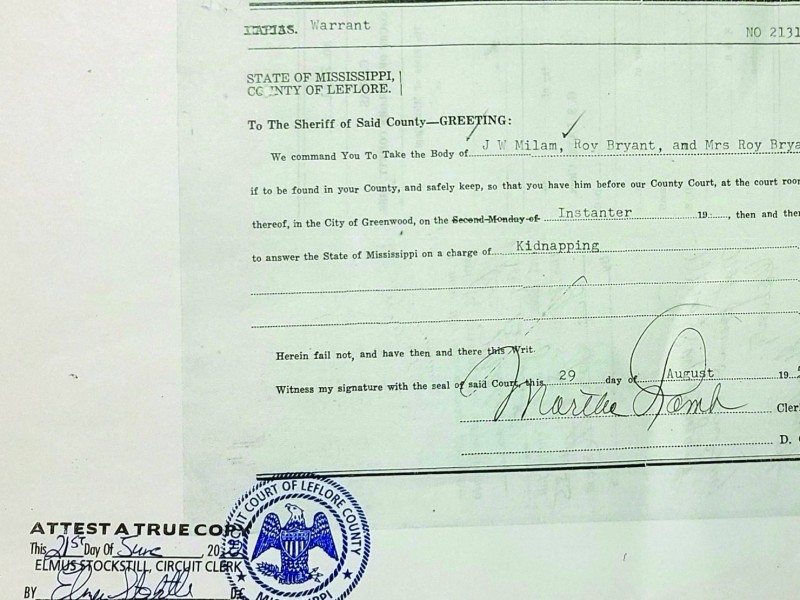
Squeezed in between news of the celebrations of Juneteenth and Independence Day, it is fortunate that the discovery of the 1955 arrest warrant for Carolyn Bryant was not buried. Of course, it would have been very difficult to do that. Even if there had been an attempt to omit the story after the initial news cycle blitz, members of the Emmett Till family and social justice advocates across the country would have refused to let it be ignored.
With news of the discovery of the warrant, there are now a million questions about what should and will happen as a result. Not having been trained in the law, this writer can only raise the type of questions that lay persons ask. Hopefully, they will, nevertheless, help generate helpful actions.
The first question to be asked is “since citizens who were interested in the case were able to find the arrest warrant within a matter of hours, why had it not been discovered/revealed over all these years by local officials or even the FBI?” We think we know the answers and can speculate all day, but the question remains, “why was the document dormant and not brought forward by anyone until now?”
Why were no actions taken when the law enforcement officials back in 1955 claimed that Bryant could not be located in the county? The world knew where she was. Even after the acquittal of Roy Bryant and J.W. Milam for the murder of Emmett Till, why were not only Carolyn Bryant, but the law enforcement officials in Leflore County, pursued for possible conspiracy to cover up the crimes? Again, we think we know the answer. Can local officials since that time, including the present ones, be prosecuted for not being forthcoming with the relevant documents? They appear to have been at least negligent, if not willfully criminal.
No one has raised any question about the authenticity of the warrant, so why has action not been taken since its discovery last month? Regarding district attorneys having the discretion to prosecute or ignore offenses, such as assisting people with abortions, one wonders now will there be an attempt to ignore and not prosecute Carolyn Bryant due to her age, the passage of time, or some other extenuating circumstance. Other criminals have been prosecuted despite similar advanced age, including civil rights murderers, sexual predators, and even Bill Cosby.
There have been noises made about the FBI having closed the case. It does not seem that that action would affect the state crime that was apparently committed. What is the statute of limitations for accessory to kidnapping and murder at either level – state or federal? At a minimum, the world needs to know the extent of Bryant’s involvement, if any, in both the kidnapping and the murder.
The present effort to arrest and question Carolyn Bryant is not solely about trying to punish an elderly woman whose husband and brother-in-law have gone to their graves without punishment. It is possible that, with the questioning of Carolyn Bryant, more could be learned about other living co-conspirators who had even larger roles to play in the kidnapping, torture, and murder of Till. For an example, there have long been rumors that many more members of the Bryant/Milam clan were involved in the torture and murder of Till; rumors that such activities took place more so in Sunflower County than Tallahatchie or Leflore counties; rumors that law enforcement officials in several counties hid witnesses who could have provided crucial testimony at the trial.
Arresting and questioning Carolyn Bryant may not answer every question, but it could lead to a greater degree of justice in the case. It would demonstrate that there is a willingness to get to the bottom of the truth, to pursue justice wherever it may lead, and to bring about a greater degree of healing to the state and country at a time when division is so prevalent and persistent.
To leave the matter unaddressed after this bombshell revelation would simply beg for more of the same in terms of lies, division, and animosity. The Till family, Black citizens, and the entire country deserve better than that.
Author