The salvation was my own
By Selika Sweet, M.D., FAAFP
JA Guest Writer
Many years ago, I began working as a physician in emergency rooms across rural Mississippi and Louisiana. I was in my late twenties when I first walked through those doors, armed with a stethoscope, a white coat, and a well-worn scut book tucked under my arm.
No physician wants to miss a diagnosis.
In those days, there was no radiologist immediately available at three o’clock in the morning. You read your own X-rays, made your own decisions, and carried the weight of those decisions home with you.
One night, a 35-year-old woman arrived in the emergency department after a traumatic injury from a motor vehicle accident. Nearly ten X-rays glowed on the light board in the dark radiology reading room. I studied each one carefully.
My greatest fear was overlooking something important, a fracture that needed splinting, a pneumothorax that required a chest tube, or a bowel obstruction that could become a surgical emergency.
As I stood there reading and silently praying that I would not miss anything, I became aware that someone was standing behind me.
He was tall and lanky, with dark brown skin, a kind face, and quiet confidence. I could hear him breathing over my shoulder. Then, without saying a word, a pencil appeared in front of the film.
The tip settled on a faint line I had completely overlooked.
There was a hairline fracture of the right distal tibia.
The young man was the X-ray technician, and he was brilliant.
He carried himself with a streetwise swagger that concealed a gifted and deeply analytical mind. Over time, I learned that whenever I left a difficult film on the board, he would quietly come over and point out what I had missed. He never embarrassed me. He never made me feel inadequate.
He simply helped.
One evening, I asked him, “How did you get into this? You’re incredibly smart. You really know what you’re doing.”
He smiled.
“One of my friends was in a summer STEM program at the university, something like Upward Bound,” he said. “I wasn’t enrolled, but I tagged along for the free food. I even went on some of the trips and stayed in the dorms. One day I sat in on a lecture. I liked it, so I started going to all of them. It seemed like nobody realized I wasn’t actually in the program. Or maybe they did.”
He laughed.
“After that, I decided to enroll in junior college. I’d always been good at math and science, so I earned my radiology technician certificate and graduated at the top of my class.”
His story stayed with me.
I thought about the pre-health professions program I attended at Dillard University in New Orleans after high school. I was only seventeen when I arrived on campus that summer, uncertain about my future but eager to learn. That experience opened doors I never knew existed and helped shape the course of my life.
One summer program changed his life.
One summer program changed mine.
Years later, the emergency room taught me just how connected those two stories really were.
The emergency department can be a difficult place for a young physician. You carry enormous responsibility. You make critical decisions with incomplete information. And long after patients leave, you wonder whether you missed something that could alter the course of their lives.
More than once, that young technician spared me from that fear.
His sharp eye, quiet confidence, and willingness to help made me a better physician. He may never have realized it, but he taught me as much as anyone I encountered during those early years of practice.
Recently, I was reminded of that lesson.
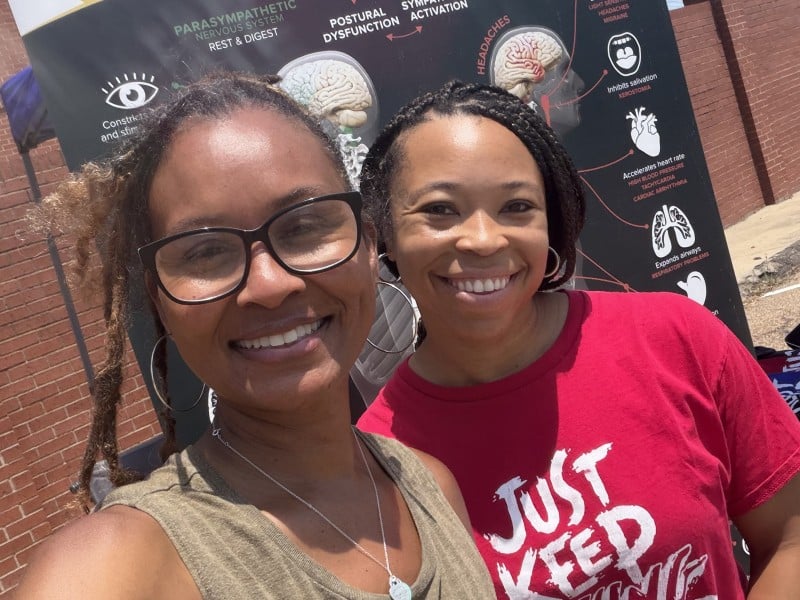
From June 12 through June 14, 2026, the Mississippi Medical and Surgical Association met in northeast Mississippi under the leadership of President Vernon Rayford as part of Magnolia Health Professionals. On Friday, physicians, pharmacists, and dentists spent time with young people from the Boys & Girls Club of North Mississippi.
We demonstrated intubation techniques. Pharmacists discussed medications and careers in pharmacy. Dentists introduced students to oral health and dental practice. Community partners such as Access Family Health Services, North Mississippi Health Services, Sigma Gamma Rho Sorority, Incorporated, and Amplify Plant-Based Nutrition shared resources and opportunities.
The curiosity on those young faces was unmistakable.
They moved from table to table asking questions, trying new skills, and imagining possibilities they may never have considered before.
As I watched them, I thought about the young X-ray technician.
One lecture had changed his life.
One opportunity had opened a door.
One program had helped him discover gifts he did not yet know he possessed.
The young people we met that day may become physicians, pharmacists, dentists, nurses, scientists, engineers, teachers, entrepreneurs, or community leaders. Some may come from circumstances that make success seem unlikely. Others may simply need someone to show them what is possible.
That is why mentorship matters.
When we invest in young people, we often imagine that we are the ones doing the saving. We believe we are opening doors, offering guidance, or creating opportunities for someone else.
But life has a way of coming full circle.
The young person you encourage today may become the professional who helps countless others tomorrow. The student sitting quietly in the back of the room may one day save a life, discover a cure, teach a generation, or strengthen a community.
And sometimes, that person may help you.
Standing in that emergency room years ago, I thought I was the physician and he was the technician. I thought I was the one with the knowledge and he was simply part of the team.
I was wrong.
He was teaching me every bit as much as I was learning.
The opportunity someone gave him became a blessing to me.
The door that opened for him helped keep another door open for countless patients who depended on my judgment.
That young man probably believed his success belonged entirely to him.
But his success became part of my story.
And that is the lesson mentorship teaches us over and over again.
The lives we touch rarely end with the people standing in front of us.
They ripple outward in ways we may never see.
That day in the emergency room, I thought I was helping save lives.
Years later, I realized I had learned a different lesson.
The salvation was my own.