Saint Augustine Seminary celebrates 100 years in Bay St. Louis, Mississippi
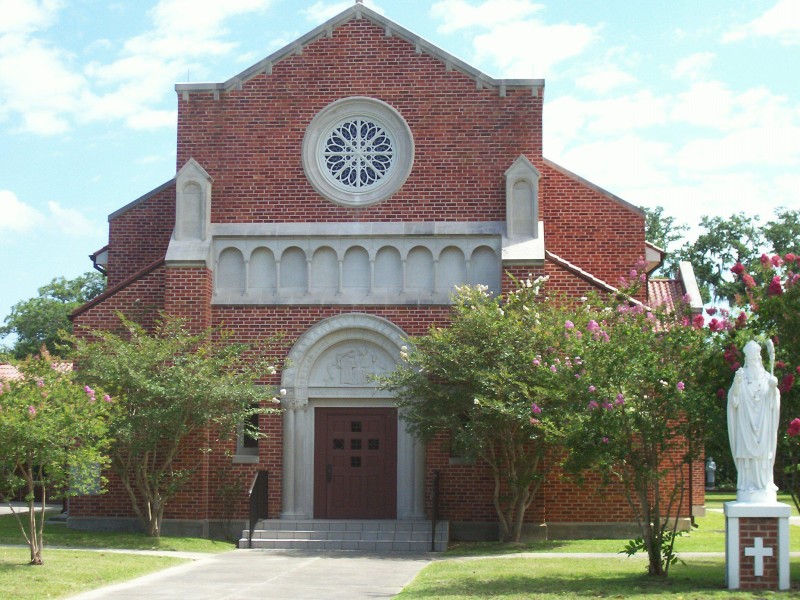
Centennial celebrations are generally very special, whether they are for individuals who turn 100, for municipalities, or institutions. It is in that special glow and atmosphere that thousands will gather in Bay St. Louis on Saturday and Sunday to celebrate the fact that Saint Augustine Seminary arrived there in 1923 to develop Black Catholic priests.
It should be noted that the seminary was named Saint Augustine in order to honor that brilliant bishop of the early church. It thereby helps to recognize him and say to the world that he was a Black man and that the Catholic Church existed in Africa long before Christianity gained a foothold in most European countries.
It also needs to be duly noted that this seminary had originally began as Sacred Heart College in Greenville in 1920.
As an institution for the development of Black priests, it was the first permanently established place where Black priests could be developed and ordained. In recognition of that fact, the Society of the Divine Word (SVD), which began and continues that work, sponsored a celebration in Sacred Heart Parish in Greenville on the seminary’s location in 2020. It was the search for a more accommodating location that led the SVD to relocate the seminary to Bay St. Louis.
On the other hand, Augustus Tolton, the first recognized African American priest, had been developed and ordained in Rome in 1886. After his ordination, he was assigned to several parishes where he was not fully welcomed by racially prejudiced congregations. He eventually developed Saint Monica Catholic Church in Chicago, which was something of a “national” Black parish. It is also interesting to note that the church was named in honor of Saint Monica, recognizing her Blackness and African roots.
Charles Uncles, the first known Black priest to have been developed and ordained in the United States of America, had been so developed and ordained in Baltimore in 1891. He went on to play a key role in the development of Black priests through the Josephite religious order.
We note these quirks and exceptions because the Healy brothers – James and Patrick – were born of an African American mother but “passed” for white due to their physical likeness towards their Irish American father. They both had been priests; James was a priest and the Bishop of Portland, Maine, and Patrick was a Jesuit and president of Georgetown University. James had been ordained in 1854 and Patrick in 1864.
We also make this diversion because, although the Society of Saint Joseph of the Sacred Heart (Josephites) accepted Black men for development and ordination in the priesthood, their institution did not begin as such and did in fact close its doors for a while to Black candidates.
This brings us back to the recognition of Saint Augustine in Bay St. Louis as they celebrate 100 years of developing Black priests. Although the Society of the Divine Word is an international religious order, most of the Black priests who have served in Mississippi, Arkansas, and Louisiana have been SVDs. Perhaps a quarter of the Black Catholic bishops in America, including the first recognized one, Bishop Harold Perry, have studied at Saint Augustine. We, thus, congratulate the institution, those who have been affiliated with it, and those who have benefitted from it during its 100+ years of existence.
Author