Vicksburg National Cemetery works to restore Black Civil War gravesites damaged by erosion
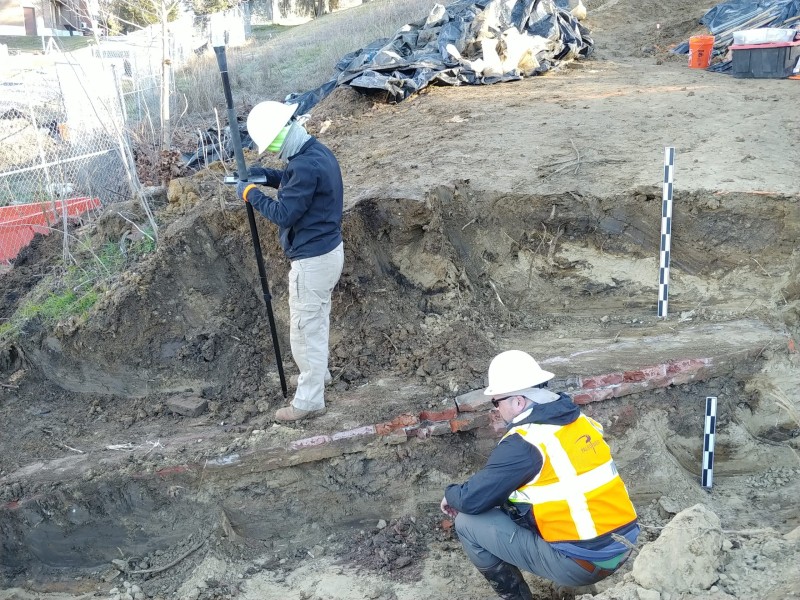
The Vicksburg National Cemetery, the nation’s largest burial site for Black and White Civil War troops, reports that as of January 25 the effort to recover and restore more than 83 Black Civil War soldier gravesites dislocated during a landslide two years ago has been successful.
“We estimate that only 15 more burials may still need to be excavated, though we will be coordinating with the U.S. Army Corps of Engineers to make a final determination in conjunction with the stabilization plans,” said Vicksburg National Park Superintendent Carrie Mardorf. “There are as many as 66 cemetery burials remaining in Section J, and the majority of these burials and their associated grave markers appear to be intact.”
Most of the 7,240 Black troops buried at Vicksburg were assigned unknown grave markers and were identified by their regiments under the banner of the United States Colored Troops (USCT).
The Black burial ground, covering a large section of the northwest quadrant of the cemetery’s 116 acres, was for many years one of Mississippi’s – and the nation’s – best kept secrets. Nearly all Black natives of Vicksburg over 50 years of age today were never told of the cemetery’s importance. In fact, they were told the contrary, that their parents and grandparents had played no role in the Civil War at Vicksburg, not to mention the silence about the 7,240 USCT souls buried in the National Cemetery.
Bennie McRae, the noted researcher of Black Civil War troops and battles, who is also the former webmaster of the Lest We Forget Website, said he is happy to hear of the current recovery and restoration.
“Some of the soldiers buried at Vicksburg were killed during the early Siege of Vicksburg in 1863, although most of them were killed on surrounding battlefields after the siege,” McRae said in a Tuesday morning interview from his home in Trotwood, Ohio. “They all should be honored for their patriotism and the sacrifices they and their families made at that time. We should do whatever we can to preserve their legacy and memory although we don’t know a lot about them individually.”
The Jackson Advocate reported in its October 24th, 2022, edition that unusually heavy rains and windstorms had disturbed the cemetery’s hillsides and surrounding areas beginning in 2020.
“Erosion in the cemetery over the last two years has affected 96 burial sites in a sector containing 295 graves,” the report said. “A number of invasive trees and other plants have been left in place in order to stabilize the earth surrounding the affected graves. If the wild growth is removed, rain and the other elements will most likely accelerate the damage, the project archaeologist said.
National Park officials meeting with representative stakeholders from Vicksburg and Warren County in October 2023 said they hoped that a “partnership” between the Park Service and the local community will be able to stop the erosion and return the cemetery to its intended purpose.
“The park has also made great strides these past few months by restoring personal identities to multiple individuals buried in the National Cemetery,” Mardorf said. “Throughout 2024, we will highlight the history and contributions of many African Americans here at Vicksburg, from the Civil War through the Civil Rights Movement.”
Author