Urban agriculture taking root in Jackson inner city churches
By Alice Thomas-Tisdale
JA Publisher Emerita
The USDA renewed the People’s Garden movement in 2022 which is 3-pronged:
Celebrate communities growing fresh, healthy food
Support a resilient, local food system
Teach people how to garden using sustainable practices
Taking full advantage of the programming that allows for utilizing green space for inner city neighborhoods is InTouch Community Services, Inc., a non-profit, community-based organization that is dedicated to easing the negative consequences of social, political, and economic challenges in rural and urban communities. The Jackson-based organization was created to support and revitalize communities, especially those that are impoverished or struggling. Dr. Samuel Thompson, Founder/Executive Director, says InTouch is also involved in a wide range of community services that meet local needs such as education, job training, healthcare, commercial development, and other social programs.
With the support of USDA and NRCS – Natural Resources Conservation Services – InTouch recently presented two urban ag workshops in Jackson. The first, “Garden Practices and Climate Change,” was held Sept. 26 at Rosemont MB Church, 3930 Officer Thomas Catchings Sr. Drive.
Entitled “Garden Practices and Climate Change,” Pastor Jimmie L. Edwards, who also serves as the church’s Farmer and High Tunnel Director, discussed the successes of the urban garden located on the church grounds, but warned, “If God doesn’t give the increase, it won’t happen. It doesn’t matter how you prepare the ground, or plant the seeds,” he said after recalling one season where “we did everything right, but when it came time to harvest, it was small.”
Among those replying “Amen” to Rev. Edwards assertion that every good garden needs a blessing was Melvin Miller, Program Manager, InTouch Community Services, Inc., who introduced discussion topics: Winter and Spring Garden Planting, Garden Irrigation Practices, Gardens and the Effects of Climate Change, and Tree Canopy and Gardens.
Offering participants valuable insights and resources for planting and managing urban gardens was Ralph Arrington, Conservation Consultant, Alcorn State University. Acknowledging that God gives the increase, Arrington discussed the science in urban gardening. “It’s important to know what was here before Rosemont? You’ve been here 70 years but was the soil type before that?” he asked, explaining the original soil type is probably 12 feet down. “The clay was brought in, so you have to mill the soil to make it healthy again,” he advised.
Participants were eager to share their gardening success stories. Even Rev. Edwards told of his making hybrid plants from crushed whole cucumbers.
NRCS couldn’t be happier with the results at Rosemont and other community gardens that incorporate sustainable practices, many of which are rooted in conservation practices that NRCS helps farmers and ranchers with across the country.
NRCS offers technical and financial assistance with conservation practices, including high tunnels, soil health, weed and pest management, composting facilities, and irrigation. Through free technical assistance, NRCS can help urban farmers identify their goals and develop a conservation plan.
“Urban agriculture provides critical access to healthy food for local communities, as well as jobs, increased green spaces, and closer community ties,” said Dr. Melvin Miller.
InTouch’s second urban ag workshop was held Sept. 28 at Hope Spring MB Church, 5189 Livingston Road. This workshop focused on: Starting a Winter Garden, Careers in Agriculture, Climate Smart Urban Gardening Tips, and USDA/NRCS Youth Program opportunities.
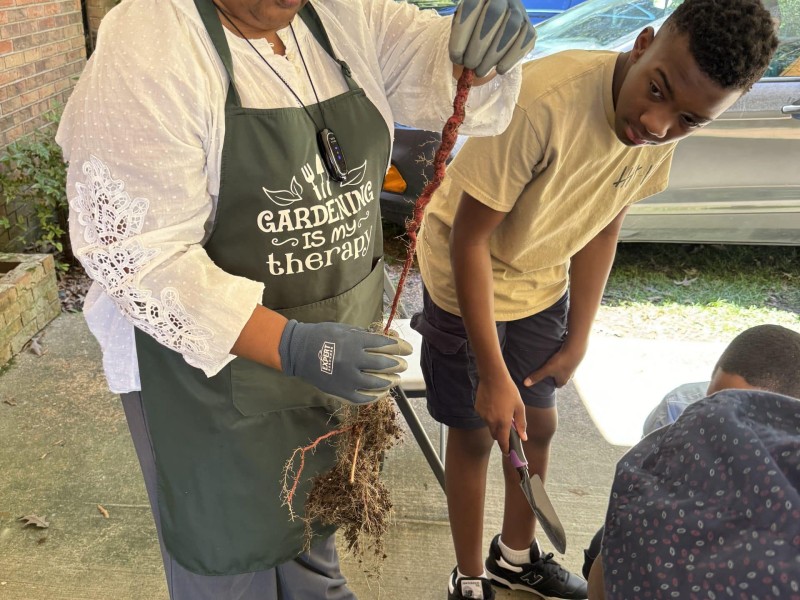
A plus is that Dr. Samuel Thompson also serves as pastor of Hope Spring. Participants, especially the youth, truly enjoyed getting their hands dirty picking sweet potatoes from the church’s garden.