Professor Michael Morris does masterful job on MLK in Mississippi
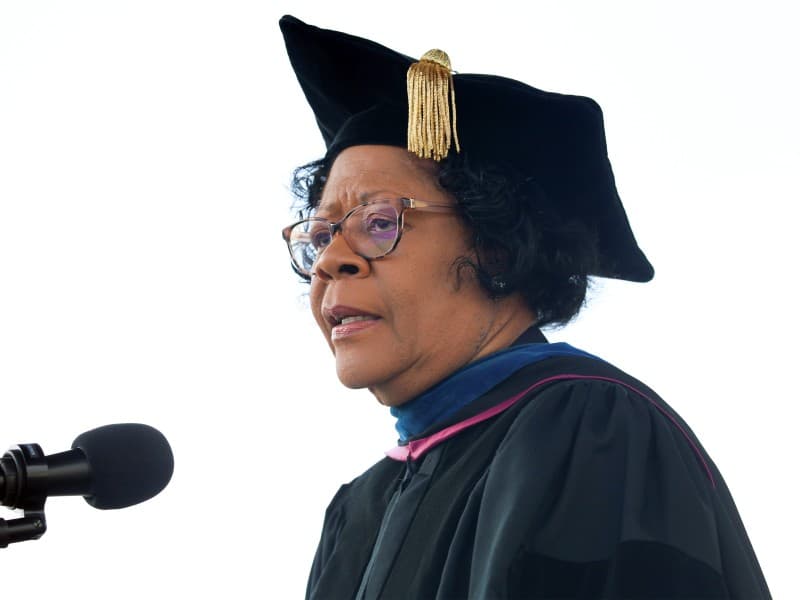
History is Lunch, after a somewhat lengthy holiday break, re-opened on what has to be considered a high note. It featured Professor Michael Morris, the Director of the Two Mississippi Museums. His topic was Martin Luther King in Mississippi.
Despite all the speeches heard and articles read, it was quite a welcome experience to listen to Morris’ exposition on King’s visits to Mississippi. It was important to realize this study covered King’s actions in the state during the decade of 1958-1968.
Morris proceeded to inform the audience of King’s forays into the state as well as how his encounters with Mississippi civil rights leaders led to the visits. Accordingly, Dr. King had his first encounter with the Mississippi civil rights movement when Dr. T.R.M. Howard, a physician and civil rights leader from Mound Bayou, spoke at Dexter Avenue Baptist Church shortly after the Emmett Till lynching. Next, Dr. King met Medgar Evers the next year in San Francisco at the NAACP convention. Thirdly, in 1958, Dr. King had the first meeting of the Southern Christian Leadership Conference (SCLC) in Clarksdale. He had become friends with Aaron Henry, who was a pharmacist in Clarksdale and was state NAACP president.
Year by year, Morris discussed events in Mississippi that attracted King to the state. The events included the 1958 SCLC convention in Clarksdale, wherein a letter critical of the handling of the Brown vs. Board desegregation was sent to President Dwight Eisenhower. Dr. King followed up his visit with meetings at Campbell College and the Masonic Lodge in 1959.
In 1960, SCLC met in Jackson while Dr. King was president. At that time, the local television stations, white-owned daily newspapers, and the Black-owned Jackson Advocate (which then was influenced by the Sovereignty Commission), tried to persuade Black citizens to boycott Dr. King’s visits. Dr. King, nevertheless, was back at the Masonic Lodge and at Tougaloo College to welcome the Freedom Riders in 1961.
During 1962, Dr. King was in Clarksdale at Haven Baptist Church speaking on behalf of the Black boycott in that town. That same year, he campaigned for several Black political candidates in Jackson.
In 1963, Dr. King attended the funeral of Medgar Evers. In 1964, at the invitation of Bob Moses, Dr. King came to Mississippi to support Freedom Summer. He simultaneously spoke on behalf of the Congress of Federated Organizations (COFO) and the effort to have the segregated delegation of Democrats replaced by delegates from the Mississippi Freedom Democratic Party at the Democratic National Convention.
In 1966, Dr. King helped complete James Meredith’s March against Fear. During that excursion, Dr. King made a trip to Philadelphia where three civil rights workers had been murdered, supported the marches to desegregate Grenada’s public schools, and had behind the scenes talks with Stokely Carmichael about the concept of Black Power.
In 1968, Dr. King went to Mount Beulah in Edwards to discuss a poor peoples’ campaign. He had hoped to secure the support of Delta Ministry, the NAACP, and the Mississippi Freedom Democratic Party in that campaign. While on that mission, he visited Batesville, Marks, Clarksdale, Greenville, Greenwood, Laurel, McComb, and Hattiesburg. He eventually decided to launch the Poor Peoples’ March in Washington from Marks. This was his last trip to Mississippi, as he was assassinated not long after visiting his friend Aaron Henry in Clarksdale, on the way to Memphis.
Professor Morris displayed a commanding knowledge not only of Dr. King’s travels to and activities in Mississippi. He revealed a deep knowledge of the movement in Mississippi, including the leaders and activists in the various communities and how they interacted with Dr. King.
Professor Morris’ session ended with a number of supportive comments and expressions of appreciation. For the masterful job that he did on that project, the writer felt that he deserves to be called, Professor.
Author