OPINION: With what mentality do we approach the mayoral election?
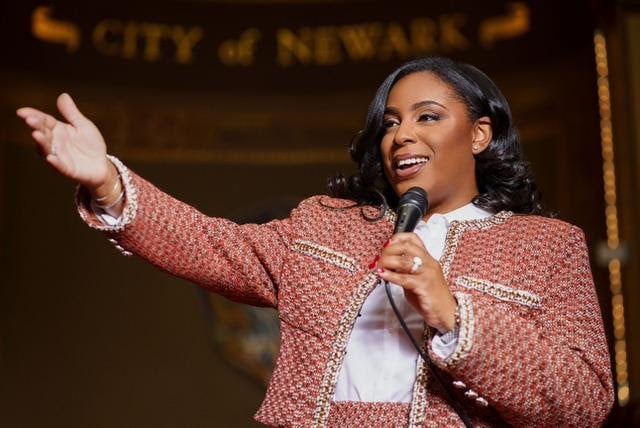
Except for those who have become so overcome with a plantation mentality that they do not vote and are willing to let “the man” do what he wants to do, the election is not over. The mayoral race has just been narrowed to two people – John Horhn and Chokwe Antar Lumumba. Because there is still this work to be done, we raise the question, “with what mentality do we approach the mayoral election?”
Virtually everybody is aware that most of Jackson’s critical problems – water and sewage, roads and bridges, gun violence, suburban flight, and revenue shortfalls – are not new. They have been inherited. They have been continually exacerbated by state leaders, and are likely to remain no matter who wins the election.
We make this point because it is apparent that many voters blame Lumumba for the problems. This kind of reaction goes back to at least the days of the Harvey Johnson administration and grows in part out of a mentality that expects and demands that a Black official must be twice as good as a white one; must be a Superwoman or a Superman. More than a few people of this ilk think that only a white mayor can get the city to where it needs to be.
In case some were not paying attention, Lumumba was able to save the city’s water and sewage system from being taken over by the state by seeking federal assistance. (It was only later that Ted Henifin, who was sent by the federal government, stabbed us in the back.) Lumumba fought a lonely, losing battle to have gun ownership more strictly regulated, which could have greatly reduced crime. He, as well as several of his predecessors, lobbied unsuccessfully for state-approval of mechanisms to generate local tax revenue. He fought and prevented the state take-over of Jackson Public Schools. Thus, the problem has not been Lumumba’s inaction, but that of people who oppose strong Black leadership.
Based upon the struggles listed and others, such as retaining ownership of the airport and attempting to block the expansion of the state police and accompanying courts, some state leaders have said that they cannot work with Lumumba. (Unfortunately, there have been Black spokespersons of a certain mentality who mimic that position as a reason for not supporting Lumumba for mayor.) What that kind of position from white leaders generally means is that they prefer to not work with and will work against such a Black person. It is what we often witnessed regarding Barack Obama, Medgar Evers, T.R.M. Howard, and numerous others who were strong in their representation of Black interests. One can easily ask the question, “who among you could have worked with Ross Barnett, Kirk Fordice, or Donald Trump?” Black people cannot afford and should not be expected to reject their own leaders merely because they are strong advocates with whom conservatives do not care to work. Otherwise, no progress can be expected or will be made. We need to take into the voting booth the same type of mentality that we would proudly display at a Kwanzaa or Juneteenth rally; that as Black Jacksonians we will not adopt a slave mentality, select representatives who may take an Uncle Tom approach to our needs, nor allow others to outline how we need to negotiate with other entities of government.
This brings us to another matter that continues to surface, the FBI investigation and federal indictment of Lumumba. Despite the media reports, several concerns surface. (1) Why was Lumumba targeted for the FBI sting operation in the first place? Was he too independent as a Black male mayor? (2) Is this not the pattern that we have seen over the generations with Marcus Garvey, Malcolm X, Stokley Carmichael, Martin Luther King Jr. and others? There has been no trial or conviction. Should Black citizens jump to, or be led to, conclusions by mainstream media and therefore abandon this leader or throw him to the wolves in this critical time, while leading hypocritical white spokespersons gladly embrace the multi-indicted and even convicted Donald Trump as president/dictator. It takes a certain kind of mentality on the part of Black people to play along with such callous treatment of such a competent and promising young brother as Lumumba.
Finally, we come to the most ironic part of the situation. Since we now know the plot that was hatched by the Republicans, which was to denigrate Lumumba and massively invade the Democratic primary in support of John Horhn, why would we either not vote at all or support the choice of Jackson’s conservative Republicans? These are the people who have forever been opposed to our interests. Regardless of how one may feel about Horhn personally, it takes a certain kind of mentality to think that he would not become a servant for his Republican supporters who almost single-handedly put him at the head of the line.
Despite the passing of the first primary and where one may have publicly stood at that time, it is not too late to take a corrective course of action. It is far better to quietly, evenly privately, do the right thing, than to by-pass the chance to demonstrate that you are not dominated by a slave mentality, or Uncle Tom outlook, and that you know what it means to be Black in America and will do all in your power to advance their collective call.
Author