OPINION: U.S. aid toward Africa
Dr. James E. Sulton Jr.
JA International Correspondent
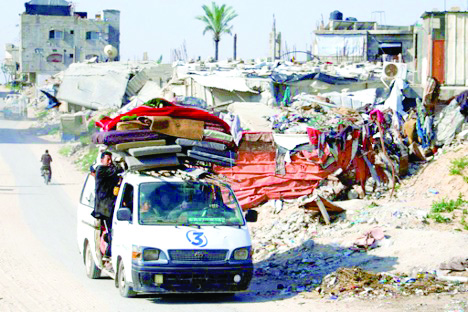
Many Africa observers have been thrown into a state of shock because, as of early 2026, the U.S. has significantly reduced humanitarian aid to Sudan following its 2025 cuts to 83% of USAID programs. The State Department shuttered many emergency kitchens and threatened millions with starvation, although some new, targeted, and smaller-scale funding, such as a $200 million injection in February 2026, has been announced. The situation is described as a “forgotten” crisis with severe famine risks.
Over recent years Africa has fallen off the list of foreign policy priorities set by the U.S. government. This is painfully reflected in the areas of development aid and humanitarian assistance. In 2025 the Trump administration began to eliminate all humanitarian funding in several African nations. There were major cuts throughout the year 2024, and especially after USAID was dismantled in 2025. By February 2026, the remaining lifesaving humanitarian aid programs in seven African nations—Burkina Faso, Cameroon, Malawi, Mali, Niger, Somalia, and Zimbabwe—were put on track to expire.
U.S. foreign aid to Africa used to be substantial. America historically focused on health and humanitarian needs in Africa. Now all aid is set to disappear completely. When Elon Musk took the helm of DOGE (Department of Government Efficiency), he executed funding cuts that made aid to Africa all but disappear. Bill Gates described what Musk implemented as the world’s richest man killing its poorest people.
As recently as FY 2024 sub-Saharan Africa received about 12.7 billion dollars out of roughly 41 billion dollars in total U.S. foreign assistance. In addition, there were billions of dollars dispersed through global health and climate related programs. African countries were the major beneficiaries of that assistance.
A congressional overview of planned FY 2024 assistance showed Africa at that time remained one of the largest regional recipients of U.S. foreign aid, especially in the health science areas.
Since FY 2022, the United States has provided nearly 20 billion dollars in life saving humanitarian assistance and resilience programming in Africa, covering food insecurity, displacement, and climate related shocks. A single 2023 pledge added one billion dollars in humanitarian aid for internally displaced persons and refugees in 31 sub Saharan African countries, bringing total U.S. humanitarian assistance in FY 2024 to nearly 6.6 billion dollars globally, with Africa as a primary focus.
Bear in mind that many U.S. foreign aid programs worldwide are still in Africa. Nigeria, Mozambique, Tanzania, Uganda, Zambia, Kenya, South Africa, Malawi, Democratic Republic of Congo, and Ethiopia rank among the top health aid recipients.
So, U.S. foreign aid to Africa remains substantial even in the face of recent reductions. The aid historically focused on health and humanitarian needs, but it is now in flux due to recent policy and institutional changes. A congressional overview of planned FY 2024 assistance showed that Africa remained one of the largest regional recipients of U.S. foreign aid, especially in health-related fields. That was prior to the current administration being sworn in.
In 2025, a major shift occurred with the initiative to dismantle USAID, the main U.S. development agency, which administered much of the health, education, agriculture, and democracy assistance in Africa.
Reports indicate that nearly all of the 12.7 billion dollars earmarked for sub Saharan Africa in 2024, and related global programs benefiting Africa, were sharply reduced or eliminated as the restructuring proceeded. Analysts warn that these reductions could reverse decades of progress on poverty reduction, disease control, and human rights, especially in countries heavily reliant on PEPFAR (President’s Executive Program for Aids Relief) and other USAID run programs.
U.S. economic and humanitarian assistance formerly reached Africa through multiple channels: the State Department and USAID grants and contracts, multilateral contributions, and other tools like the U.S. International Development Finance Corporation (DFC), which had over 13 billion dollars in investments across 36 African countries in sectors like energy, health, infrastructure, and small business.
Trade related and project preparation support from agencies like the U.S. Trade and Development Agency also underpinned digital, energy, and health infrastructure projects worth several billion dollars. It’s all gone now under the joint leadership of Secretary of State Marco Rubio and President Donald Trump.