OPINION: Lavender and purple lights
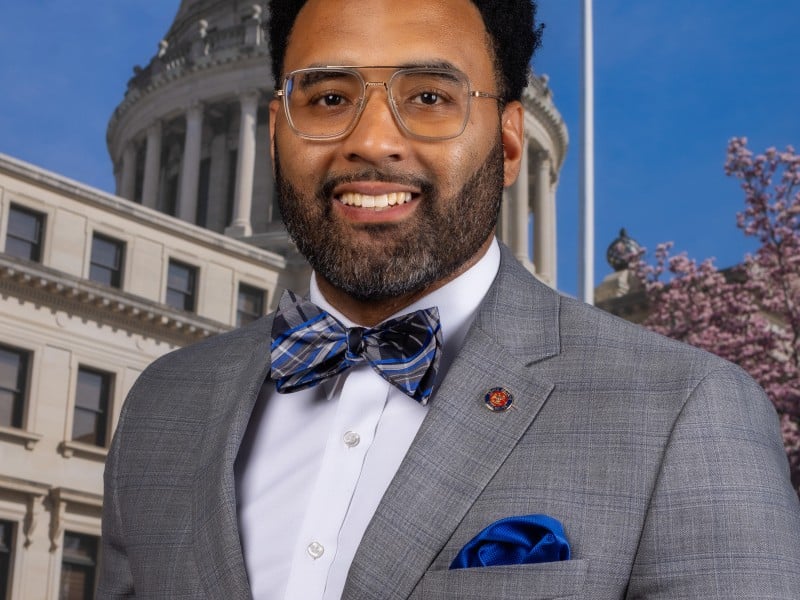
By Selika Sweet, M.D.
JA Guest Writer
After finishing an emergency department shift in Birmingham, Alabama, I did what many of us do after a long night. I went looking for comfort food. I wanted some wings.
I drove toward what I assumed would be the Black side of town. In cities like Birmingham and in my hometown of Jackson, Mississippi, neighborhoods often follow familiar historical lines. I expected what I have seen in too many urban corridors: littered streets, aging buildings, broken lampposts and the quiet but unmistakable signs of disinvestment.
Instead, I saw something different.
As I passed the train station, hundreds of lavender and purple lights shimmered across the bridge, dancing against the night sky. A large entertainment venue glowed in the distance, surrounded by hundreds of cars. The area felt alive yet orderly. Clean yet vibrant.
The Black side of downtown was shining.
Even beneath the bridge, where homeless individuals rested along the sidewalks, the space felt maintained. I rolled down my window, bracing for the odor that too often lingers in neglected areas. There was none. No trash blowing in the wind. No broken glass. No sense of abandonment. I even wondered if security cameras were quietly standing watch overhead.
I felt comfortable.
That feeling stayed with me.
Back home in Jackson, I spend time one block from Gallatin Street because of future plans for Tiger Hill at 426 West Pascagoula Street. The property sits between Jackson State University and downtown near the train station bridge. For years, like many urban corridors across America, it struggled. Lighting was dim. Lampposts were broken. Odors lingered beneath the bridge. Visibility was low.
One afternoon, a friend of mine with a history of incarceration walked downtown with me near Gallatin Street and quietly said, “I don’t feel safe here.”
That statement stayed with me. Safety is not only about crime statistics. It is about perception. It is about atmosphere. It is about whether a space feels cared for.
Recently, I noticed change.
The areas beneath the bridges look cleaner. Bright, colorful lights now stretch beneath the underpass toward I-55. The structures glow at night. The space feels intentional. Welcoming. Alive.
My ninety-three-year-old mother was with me when I pointed out the transformation.
“Look at those lights,” I said. “They’re beautiful.”
She smiled and said, “Go head, John.”
She was talking about John Horhn, Jackson’s newly elected mayor. He recently took office with a promise to restore pride and order to the capital city. My mother’s words were her way of acknowledging visible effort. She saw progress and connected it to leadership.
Her comment was about more than lighting. It was about recognition. Recognition that visible care changes how a city feels.
Lavender lights. Purple bridges. Clean streets. Investment. Presence. Protection.
Infrastructure is not just concrete and steel. It is dignity. It is public health. It is economic development. It quietly signals to residents, students, business owners, and visitors that they matter.
As a physician, I understand that environment shapes behavior. Lighting deters crime. Cleanliness reduces disease. Activity discourages neglect. When space is illuminated, it invites families, students, and entrepreneurs to participate. It raises expectations.
Neglect does the opposite. Darkness lowers standards. Broken fixtures signal abandonment. Poorly maintained public areas communicate indifference.
Light communicates possibilities.
Jackson feels as if it is building momentum. Thalia Mara Hall is active again. A new club, Beaty Street Blues, is creating a home for musicians and adding fresh energy to the nightlife. Areas that once felt overlooked are beginning to glow, both literally and figuratively.
Urban renewal does not always begin with billion-dollar developments. Sometimes it begins with functioning lights and clean sidewalks. Sometimes it begins with maintaining what already exists.
Progress in any city is never the work of one moment or one person. It is built steadily through vision, persistence, and collective effort. It requires policy, but it also requires pride. It requires investment, but it also requires expectation.
When residents see visible care, they often respond with greater care themselves.
That night in Birmingham reminded me that revitalization in historically Black communities is not only possible but also powerful. It changes perception. It changes behavior. It changes hope.
And here in Jackson, under the bridges near Gallatin Street, something is changing too.
Sometimes progress is complicated and hard to measure.
Sometimes, it looks like lavender and purple lights dancing across a bridge.