OPINION: Issues Under the Radar: United Nations, Pope Leo, and State/City
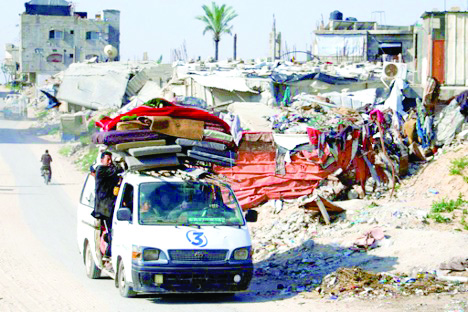
United Nations’ Two State Solution.
Last month, the United Nations General Assembly voted 142 to 10, with 12 abstentions,
in favor of a resolution calling for a viable and fully sovereign state of Palestine to be created
alongside Israel. Many Arab states have advocated for this since 1948, when Israelis displaced
Palestinians. It long has been opposed by the U.S.A., as was the case with this year’s vote.
This issue came in under the radar perhaps because it was opposed by the American
government. It is today being overshadowed by the peace initiative bearing Trump’s name.
The present peace documents, nevertheless, contain many of the other provisions as the UN-
endorsed resolution. This means the world will have to wait a little longer for a Two State
Solution providing a true home for Palestinians.
The resolution was co-sponsored by France and Saudi Arabia, and is backed by most so-
called Third World countries. Most European countries also voted in favor of the resolution.
Pope Leo’s Condemnation of Trump’s immigration policy.
Two weeks ago, Pope Leo XIV called parts of Trump’s policy, and the subsequent actions
of the Trump administration, inhumane. He suggested the policy and actions are inconsistent
with a pro-life position. In keeping with his role as a pastor, Pope Leo quoted scriptures on how
immigrants / strangers are to be treated. In addition to the condemnation, Pope Leo urged the
bishops of the Catholic Church to welcome and be supportive of immigrants.
On the one hand, many of the victims of Trump’s policy and crackdown are from heavily-
Catholic countries. On the other hand, there are more than a few Catholics, such as J D Vance,
who are a part of the administration’s team supporting the Trump anti-immigration efforts.
That support, as well as the fact Pope Leo’s comments are a part of a religious message, are
perhaps why the story is still under the radar.
Mississippi’s Plans to Assist the City of Jackson.
During the last legislative session, Mississippi Speaker Jason White appointed a 19-
member Select Committee on Capital and Metro Revitalization. Its co-chairs are Independent
Shanda Yates and Republican Clay Mansell. It is not clear whether the committee will remain
the same next session.
Meanwhile, Lieutenant Governor Delbert Hosemann appointed a similar 7-member
committee in the Senate. The Senate committee is chaired by Walter Michel, a Republican. It
has three other Republicans and three Democrats. Sollie Norwood and David Blount are the
vice chairmen of the committee. These committee appointments have perhaps been under the
radar because the state legislature has not been in session.
Readers can follow the actions of these committees in order to have an idea of what Jackson
can expect from the new state legislature. (In addition to those named above other legislators
with whom one may want to talk include, Senator Hillman Frazier, and Representatives Chris
Bell, Lawrence Blackman, Angela Cockerham, Ronnie Crudup, Stephanie Foster, Justis Gibbs,
Fabian Nelson, and Grace Butler Washington. The matter of state assistance to the capital city
has been a hot issue for at least a decade.
Author