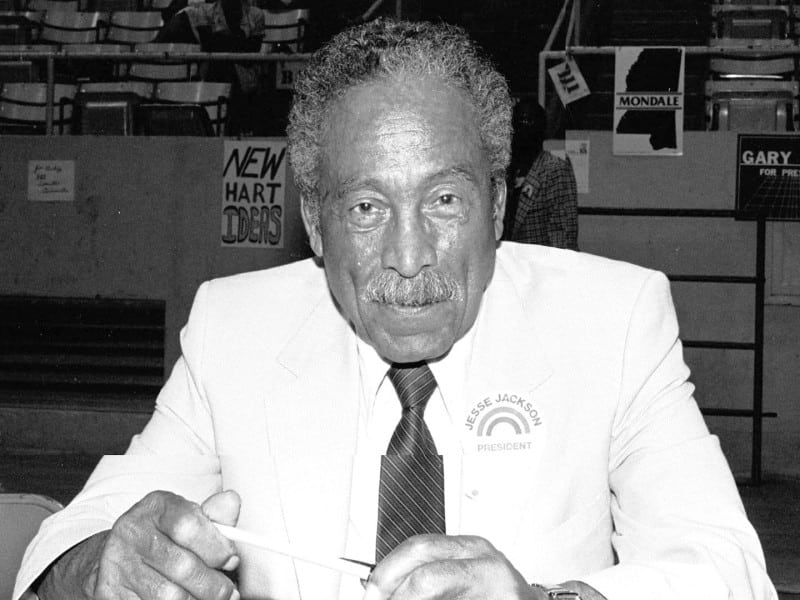
Nathaniel Estes: Entrepreneur, Patriot, and Family Man

Nathaniel Estes was raised on a farm just outside of Kosciusko, MS in 1931 during the Great Depression. He was number seven amongst a family of eight children and soon figured out that he wanted to work for himself. Being a farmer’s son, Estes was taught how to perform several jobs that required him to work long hours that often meant rising before the sun came up and working until dark. During his precious free time away from work on the farm, he frequented minstrel shows as a teenager and young adult in Pine Bluff, AR.
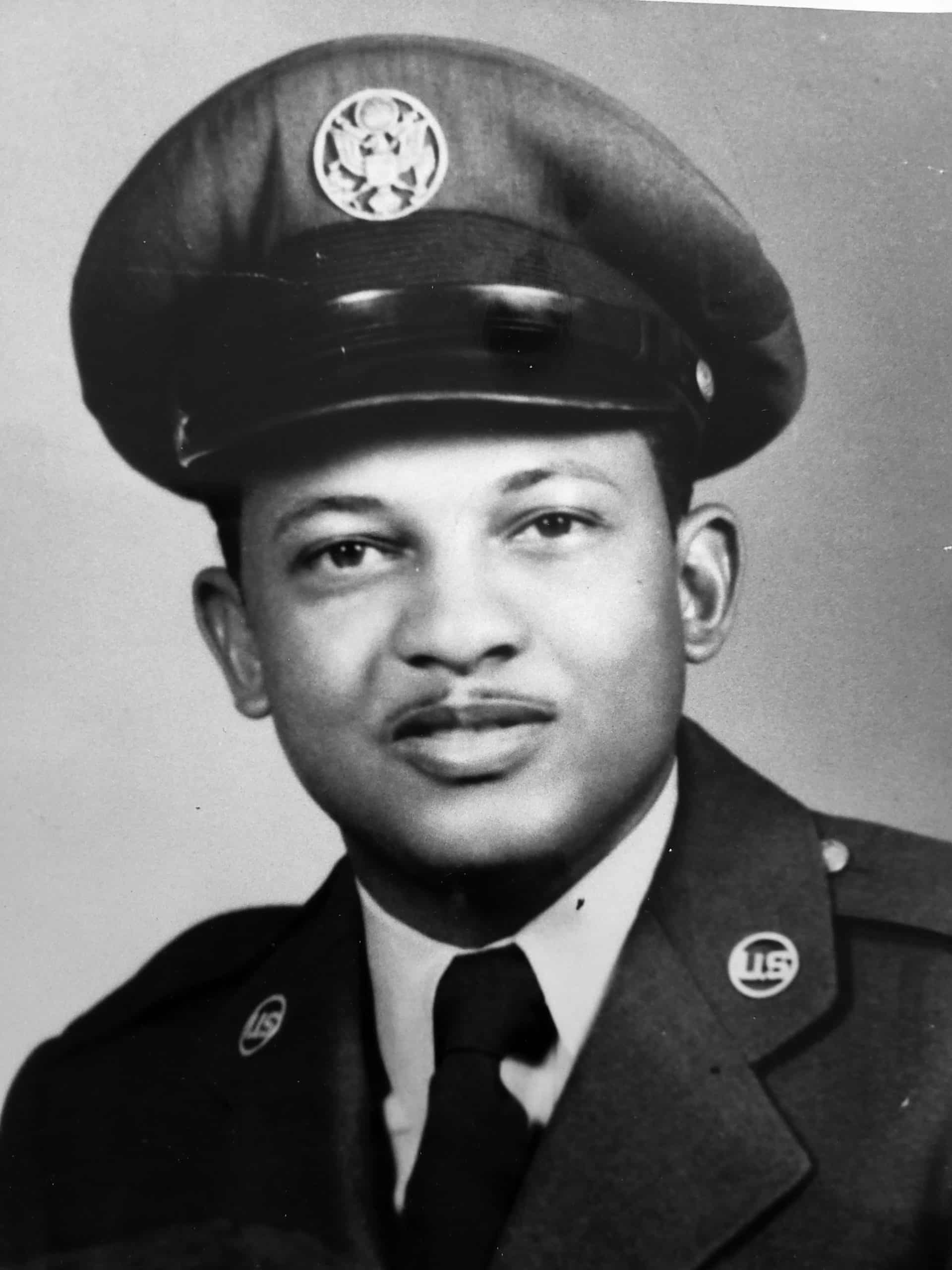
After graduating from Springdale High School, Estes volunteered for the U.S. Air Force and was stationed in Lake Charles, LA for boot camp. Corporal Estes volunteered for assignment in North Africa in a town near Casablanca after his cousin, Henry Niles Fuller, steered him clear of going to the Korean Uprising because of the fierce fighting that was going on over there.
Estes said, “I made sure that I took care of my parents … I sent an allotment check of $42 from my military pay plus $98 from the government that totaled $140 per month for four years while I was in service.” He worked as a meat cutter while in service and continued to do so when he was honorably discharged from the military in 1956. Then he went to Waterloo, IA, staying with his older brother, Jimmie, for about two months until he got his own apartment/room at 26 years old.
Estes continued working for two and a half years in a Detroit meat packing house but soon figured out that wasn’t what he wanted to do for the rest of his life. At that time, he was living with his aunt, and she had a plumbing problem that required a licensed plumber to be called to complete the job. While the plumber was working to fix his aunt’s sewer lines, Estes asked how much the job was going to cost and the plumber said, “It’s going to be a dollar a foot and the line is going to have be run for 85 feet. And it’ll take about two hours to complete the work.” Eighty-five dollars for two hours of work sounded pretty good, especially since Estes was only making $1.50 per hour at the packing house.
That was when Estes’ girlfriend, Rainey, told him that her brother was going to plumbing school in Oklahoma, and she thought it would be a good trade for Estes to take up. Plumbing school seemed a better route to take versus becoming a mortician, an idea that Estes was pondering as a lucrative trade. At this time, you had to become an apprentice before you could go to plumbing school. Estes’ friend told him to go out and learn plumbing by working for one then he could get into plumbing school. Estes worked as a plumber’s helper for a couple of months. At first, he thought plumbing was a dirty job but soon realized he could put on a pair of gloves and wash his dirty clothes. He figured that making lots of money outweighed getting dirty.
After much inquiry, Estes found out that he could get into a plumbing school at Oklahoma State University and use the GI Bill to pay for it. So off to Oklahoma he went in 1958, finishing with flying colors. By the time Estes completed trade school, he also became a husband to Rainey, started a family, and bought a house in Denver. Though his new house was rent-to-own, because Estes didn’t have any credit, the owner of the house trusted that Estes’ ability to finish plumbing school with his Journeyman’s License would ensure that the house would be taken care of.
Now, Estes was on his way. He’d moved to Denver, CO, finished plumbing school complete with his Journeyman’s License, and had married Rainey Austin from Arkansas in 1955. She was the only Black woman in Iowa that owned her own public beauty shop. Estes says, “Rainey was a great choice to marry because we were like-minded about working for ourselves.”
Estes started working for Moore’s Plumbing for approximately eight years. He became a supervisor with Moore’s and was paid for sick days and holidays, which was very different from working long never-ending hours back on the farm. He went downtown to the City Hall office where men went to get a plumber’s license in Denver and passed the city license test. He started working weekdays for Moore’s Plumbing Company and worked side jobs on weekends, working mostly on bathrooms. Soon bathroom work jobs started pouring in from everywhere. Eventually, he quit Moore’s, and in 1968 Nate started Estes Plumbing Company. He was fortunate to have worked for Moore’s Plumbing as it and Roundtree Plumbing were the only two Black-owned plumbing companies in Denver in the 1960s.
Estes said, “You know I had learned about discrimination back in Davenport, IA. I went to eight plumbing companies in Davenport before one of those white-owned companies gave me a chance. The white owner asked if I could read a blueprint and could I draw up a design, and of course I did because I had learned how to do it at Oklahoma State University. I learned early on, even back on the farm, if you want anything out of life, you have to prepare yourself and then go out and get it. Sam Peeler, a plantation owner back in Kosciusko, hired me as a kid but paid me as a grown man because I worked as hard as a grown man.”
Estes Plumbing Company’s business started booming, and Estes was able to hire several men, paying his workers top dollar. Estes recalls being approached to join the Union, but he turned down the offer. However, he started being hired as a special consultant contractor by several white-owned prime contractors specifically to identify leaks in high-rise buildings because he was just that good. He says, “I started getting jobs and contracts at the airport and with the City of Denver working on 20-story office buildings and in hospitals. Therefore, I had to hire several men early on in my business. Estes Plumbing was working about 25 men and more, depending on the size of the contract.”
Estes often said, “I always wanted to learn how to do things the right way, not taking shortcuts as many jack-leg plumbers did. I learned how to layout, draw, and design plumbing projects because I enjoyed doing work on a professional level. I always paid my workers what I knew they were worth just as Moore’s Plumbing Company had done me when I first started out. I started out making $1.50 per hour which was good pay back then, but I ended up paying my workers $33 per hour when I retired at 67 years old. I also got into real estate, buying houses and renting them out. It’s always a good idea to have an outside income, even though I had my own company. I soon had several pieces of real estate in Arizona and now I even have a summer home back in my birthplace of Kosciusko.”
In 1981, Nathaniel Estes received the NAACP Plumber of the Year Award at an awards ceremony at the Denver Convention Center. Estes never sold Estes Plumbing Company and still at 91 years old today, he still has a plumber’s license. He retired at age 67. Estes retired from a successful Black-owned business he started when there were only two Black-owned businesses that were headed by Black master plumbers in the City of Denver.
When asked what if anything he feels he needs to do now, he answered, “I just want to travel and visit my family, especially my brother Eulice Estes who’s 95 years old now in Detroit. I often give him birthday parties now that I can afford it. Nate frequently travels with his daughter, Kathy; sons, Fredrick and Nathaniel Jr.; and his wife of 67 years, Rainey.
Nate says, “I just want to help young people now and let them know they can be successful and live a good life. The good Lord has been good to me and even gave me some extra in my lifetime. When I got to Denver, I only knew one Black [plumber]. I like a man that has an idea to work for himself and takes care of his family. Now, I just want to help my family and community to live better lives.”
Author