MAE calls Jackson’s water crisis a major education issue
The organization challenges leadership and provides possible solutions for community to resolve issues
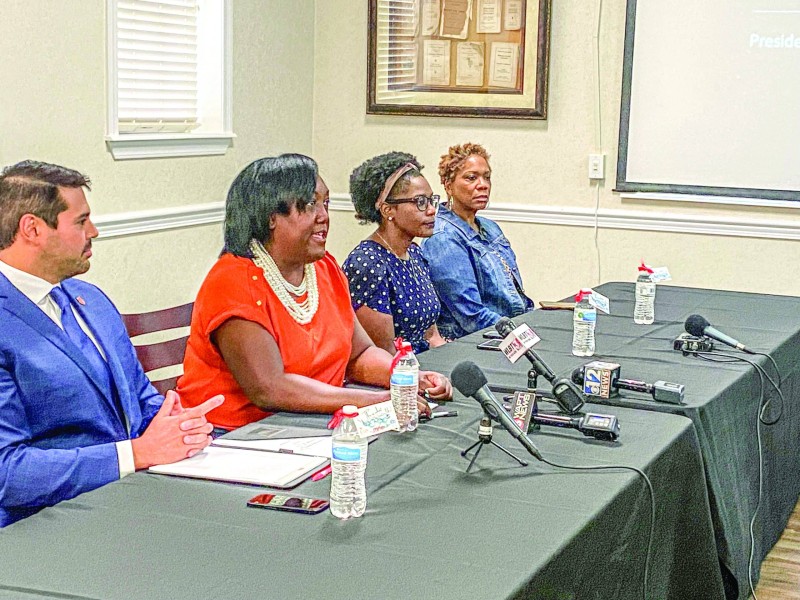
In what some may have thought an unusual move, the Mississippi Association of Educators (MAE) convened a news conference on Monday to disseminate its recently completed research study and position paper, “Solving the Jackson Water Crisis.” This is a topic that is of obvious interest to every segment of the community. What was unusual about the event was that MAE rightly focused on the matter as an education issue, not just a municipal one.
MAE President Erica Jones indicated that “the water crisis is an education crisis that affects not only our students and educators, but also our community as a whole.” MAE stressed that the situation affects the day-to-day operation of each and every school, curtailing the opportunity of teachers to teach and students to learn. President Jones went further to add to the urgency of resolving the crisis saying, “We have accepted the unacceptable for too long. But the danger is real and it is present right now. We cannot afford to wait.”
Via video, Jackson Association of Educators President George Stewart sounded the same message. He expressed the need for action by all parties concerned.
The position paper, which was based upon the association’s research and was led by Executive Director Antonio Castanon Luna, was shared with the public. Based upon its research, MAE through the position paper made four recommendations to fix or resolve the water crisis. It recommended that (1) the mayor of the City of Jackson issue a proclamation, declaring that fixing the water crisis and securing and making accessible, safe water be the first priority of his administration; (2) a fully developed structural plan be made public by September 2022, a plan that would also be open to public comment; (3) the Mississippi State Legislature, during the 2023 session, provide a plan for funding the needed improvements not covered by the ARPA grant program; and (4) that government, community, education, and faith representatives form a Jackson Safe Water Coalition to monitor the above recommendations and be an ongoing advocacy group on the issue of safe water in the city.
MAE has expressed its sincerity and dedication to the issue by reaching out and inviting all community members who are similarly concerned – the Monday news conference being just the latest cooperative community effort. There is apparently much more to come as the crisis continues and MAE remains an advocate for its resolution.
President Jones declared, “We believe that the solutions are out there; the money is out there. What we need is the will of policy makers to get together, pool their resources, lay down impeding differences, and get the job done. While we know that our proposed plan is just a start, we also know that we want to be at the table and informed. We will continue to advocate around the issue on behalf of our students, their families, and our educators.”
Author