Community celebrates 50 years since the integration of MS Highway Safety Patrol
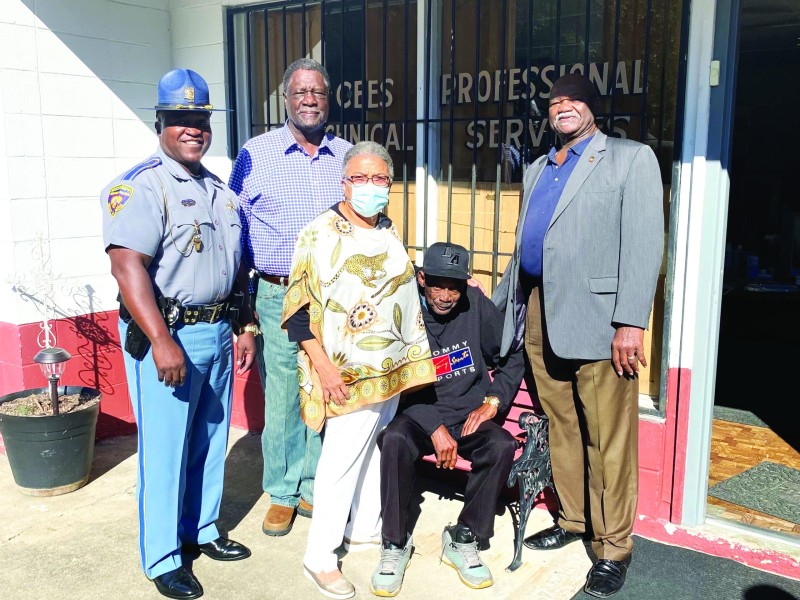
Over the past weekend, the integration of the MS Highway Patrol was celebrated. A reception was held at Tougaloo College, in the Bennie G. Thompson Auditorium, on Friday, July 29 to celebrate Atty. Constance Slaughter Harvey for her tireless work fighting for civil rights which includes filing a lawsuit on July 28, 1970 that would later lead to the desegregation of the MS Highway Patrol. Atty. Slaughter Harvey was presented a plaque in honor of her role in changing history in Mississippi. On Saturday, July 30, a banquet was held at the Masonic Temple on Lynch Street to celebrate the 50th anniversary of the first integrated class of the MS Highway Patrol which included R.O. Williams, Lewis Younger, and Walter Crosby (who passed away after battling cancer in December 2021).
A Forest, Mississippi native, Constance Slaughter-Harvey is the first African American woman to graduate from the University of Mississippi School of Law and the first African American woman judge in the state of Mississippi. As the attorney for the families of Phillip Lafayette Gibbs and James Earl Green who were killed by highway patrolmen in the 1970 Jackson State shooting, Harvey was motivated to change the racist and segregated institution that was the MS Highway Patrol.
In 2019, during the 49th commemoration of the May 15, 1970 tragedy, Harvey recounted the day that the verdict was handed down. “I remember the Highway Patrolman, jumping up in court, yelling and screaming. I remember hearing something that sounded like ‘Hotty Toddy’ and the rebel yell….My heart dropped. That very display of ‘justice’ changed my life.”
Harvey had a “concern about and dislike for the highway patrolmen and the image they projected,” so she set out to change the fabric and makeup of the Mississippi Highway Safety Patrol, citing the aforementioned case and Perkins v. the State of Mississippi – which was a case that involved the aggressive and excessive arrest of Rev. John M. Perkins and several Tougaloo students by Highway Patrolman Douglas Baldwin – as starting points.
Harvey’s husband, Jim Harvey, enlisted the help of his nephew, Willie Morrow, and his friend, Jerome Mangum, to help. “We asked them to go out and try to get an application from the highway patrol and they were refused,” says Harvey. “Then we got two white guys to go out (with the help of Dr. Aaron Henry), and they were given an application.” As a result, they were able to file a highway patrolman desegregation lawsuit (Morrow v. Crisler) in July of 1970, just a few short months after the Gibbs/Green tragedy.
This case paved the way for Williams, Younger, and Crosby, who also honored Harvey on the 50th anniversary of the Morrow v. Crisler decision on July 30, 2020. At the time, Harvey commented that she “felt like she was an instrument of God to start the change.”
In her remarks last Friday, Slaughter Harvey reflected on the fact that “it took some courage to sue the state of Mississippi.” She noted that Willie Morrow, who did not end up applying to become a highway patrolman, was blacklisted after they won the trial and was not able to find anyone to hire him in Mississippi and the surrounding states. Slaughter Harvey says “he hung in there” and eventually became a carpenter making more money than he was before.
Constance also recognized Morrow’s friend Jerome Mangum at the event. “I don’t think you’ve ever been fully acknowledged or appreciated. The sacrifices you made back then, you were a young child. People did not want to be seen with you, yet you persevered. They are because you were.”
She also relayed that though it took courage to file the lawsuit, Williams, Younger, and Crosby had to “walk through those doors, sleep with, eat with, and bathe with those individuals who did not want you there. When I look at R.O., I say he’s either crazy or he’s committed. And the commitment comes to mind. The same is true for Younger. And I was just so happy to see Crosby in November.”
When speaking about the first Black highway patrolmen and the countless Black highway patrolmen who have followed in their footsteps, Harvey expressed, “I take pride in knowing that you represent fairness and you represent what this country should be about. You bring a new life on Mississippi. And everytime I see one of you, my heart is happy. But I know you caught “pure d-hell” in getting where you are and standing where you are.”
Since 1972, there have been three Black highway patrol chiefs and out of the 507 sworn state troopers, there are currently 193 African American men (three of which are Lt. Colonels, three of which are majors, nine of which are captains, ten of which are lieutenants, and 40 of which are master sergeants) and 12 African American women. There are also five Hispanics, one Asian, and one considered Other that are MS highway patrolmen.
Author