‘Boys Don’t Cry’ gives young men permission to speak, feel, and advocate
JANS – For generations, boys have heard familiar instructions when emotions become difficult: Be strong. Toughen up. Man up.
But during the final session of the “Boys Don’t Cry” Three-Part Youth Mental Health Discussion Series, young men were encouraged to consider a different message: Strength does not require silence.
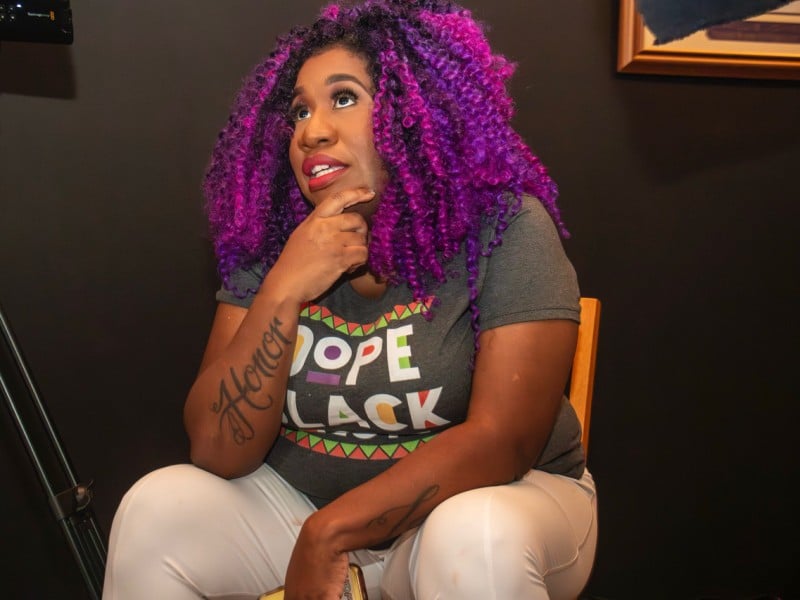
Hosted by the S.A.F.E. S.P.A.C.E. TheaterTherapy Foundation, the August 8 program at Medgar Evers Library brought teenagers together with community entrepreneurs, mentors, and youth advocates for an open conversation about the emotional and mental health challenges boys often carry without discussing.
The session concluded a three-part series designed to create an environment where young people could speak openly, learn language for difficult emotions, hear the experiences of trusted adults, and recognize that asking for help is not a sign of weakness.
The program was presented in partnership with the Mississippi Humanities Council Storytelling Initiative, using conversation and storytelling as tools to help participants examine the experiences shaping their lives.
Moving Beyond
‘Man Up’
One of the most significant conversations of the day centered on the phrase “man up” and the effect such language can have on boys who are already struggling to understand or communicate what they feel.
Participants explored how boys may receive the message that sadness, fear, anxiety, disappointment, and vulnerability are emotions they should hide.
The discussion challenged that thinking.
Young men were encouraged to understand that emotional intelligence does not mean allowing emotions to control them. Instead, it means learning to recognize an emotion, understand what may be causing it, communicate it appropriately, and make healthy decisions about what to do next.
Being able to say, “I’m angry,” “I’m anxious,” “I’m hurt,” “I’m overwhelmed,” or “I need help” can be an important form of strength.
The conversation also examined how unexpressed emotions can sometimes surface in other ways – through anger, withdrawal, conflict, behavioral changes, or isolation.
Anxiety, Depression, and the Emotions Boys Don’t
Always Name
Among the mental health topics discussed were anxiety and depression, including how they may appear differently from one young person to another.
Participants talked about recognizing emotional changes in themselves and their peers and the importance of reaching out to trusted adults rather than carrying difficult experiences alone.
The session emphasized one of the central messages behind S.A.F.E. S.P.A.C.E.: young people need environments where they can speak without immediately being judged, dismissed, or told how they should feel.
Sometimes the first step toward helping a young person is simply creating enough emotional safety for them to tell the truth about what they are experiencing.
Conflict Resolution Begins Early
The discussion also moved beyond individual mental health to examine childhood conflict resolution and respecting differences.
Young participants considered how disagreements with friends, family members, classmates, and people with different backgrounds, beliefs, or experiences can be handled without humiliation, aggression, or unnecessary escalation.
They were challenged to understand an important distinction: Respecting another person does not always require agreeing with that person.
Instead, healthy conflict resolution requires learning how to listen, communicate boundaries, manage emotional reactions, and disagree without intentionally harming another person.
These skills, presenters emphasized, are not simply childhood lessons. They become important tools for relationships, workplaces, families and communities throughout adulthood.
Teaching Young
People That Their Voices Matter
The final session also connected mental health with community advocacy.
Participants discussed how young people can use their voices when they witness problems or injustices in their schools, neighborhoods, and communities.
Rather than viewing anger only as something negative, the conversation encouraged participants to ask deeper questions:
What is this emotion telling me?
Is something happening that needs to change?
How can I respond constructively instead of destructively?
Who can help me make my voice heard?
Young people were encouraged to understand that advocacy can take many forms – speaking at meetings, working with community organizations, communicating with leaders, volunteering, organizing projects, telling their stories, and respectfully challenging conditions they believe are unfair.
The message was clear: Young people do not have to wait until adulthood for their voices to matter.
Hezekiah Esco Installed as New S.A.F.E. S.P.A.C.E.
Board Member
The afternoon also marked an important moment for the future of the organization with the installation of Hezekiah Esco as a new member of the S.A.F.E. S.P.A.C.E. TheaterTherapy Foundation Board.
The ceremony represented more than the addition of another name to the organization.
It reflected S.A.F.E. S.P.A.C.E.’s commitment to ensuring that young people are not simply the recipients of youth programming but have opportunities to participate, lead, represent their peers, and help shape conversations that directly affect their generation.
Esco’s installation served as an example of the very principle discussed throughout the day: giving young people opportunities to discover and use their voices.