MDAH calls on public to share Rosenwald artifacts
JANS – In preparation for an August 2027 temporary exhibit, curators with the Mississippi Department of Archives and History are calling on the public to share their artifacts from Rosenwald Schools that opened a century ago to serve Black students.
Rosenwald Schools are named for Julius Rosenwald, a millionaire philanthropist who was president and part owner of Sears, Roebuck and Company. He was inspired by and partnered with Booker T. Washington to fund schools for Black children across the South, beginning with six in Alabama that opened in or between 1913-1914. There were 4,978 total Rosenwald Schools. In Mississippi, there were more than 500 schools, second in number to North Carolina.
MDAH is calling on residents to search through their attics, closets, and trunks for precious objects associated with the Rosenwald Schools in Mississippi. The artifacts could take any form – a teacher’s log, teaching license, photos, desks, chalkboards, textbooks, or even cafeteria trays.
“Behind every artifact is a human story. Through these everyday school objects, we hope to bring to life the experiences of the students, teachers, and communities whose lives were transformed by Rosenwald Schools,” said Ivette Ray, director of curatorial services within the MDAH Museum Division.
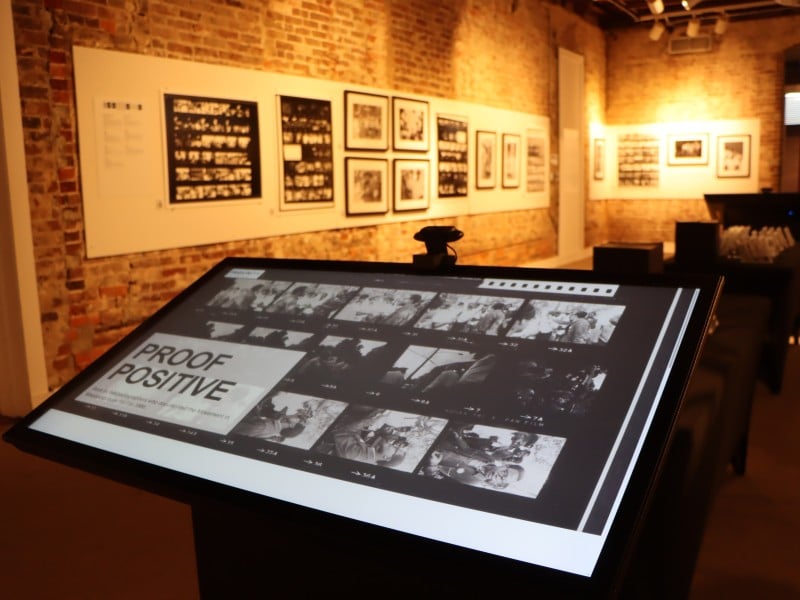
These items will be considered for an MDAH exhibit that will open in August alongside the traveling photography exhibit, “A Better Life for Their Children: Photographs and Stories by Andrew Feiler.”
Background on Schools in Mississippi
According to a “Mississippi History Now” article by former MDAH architectural historian Jennifer Baughn, public schooling in Mississippi did not become commonplace until after the Civil War.
When the United States Supreme Court decided in its 1896 Plessy v. Ferguson ruling that states could require separate public facilities for Black and white people as long as they were equal (the so-called “separate but equal” doctrine), white-dominated school boards began concentrating on funding schools for white children, rather than for Black. By the early 1900s, while many white children studied their textbooks in new functional buildings, Black students were often left to make do in churches, lodges, and poorly constructed buildings.
Beginning in the 1910s, however, new school buildings for Black students began to spring up on the Mississippi landscape as Rosenwald partnered mostly with Black communities. The last school was built in 1937.
People are asked to send a description and photo of their objects to info@mdah.ms.gov.