The punishment of Dr. Dawn B. McLin, bad news for higher education in MS and the U.S.
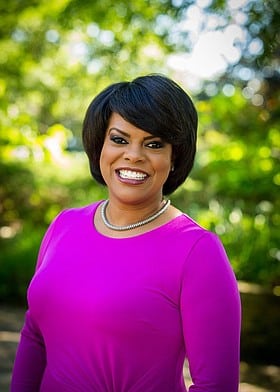
In August 2024, Jackson State University President Marcus Thompson placed Dr. Dawn Bishop McLin on indefinite “administrative leave.” In March 2025, he informed her that she would not be offered a contract for the upcoming school year. (This seems to translate into her being terminated.) Both decisions and the time in-between them proved punishments for this alumna of and above average faculty member at Jackson State University.
It is important to speak briefly about who McLin is and has been prior to looking at the ordeal through which she was put. Her mother and father are both alumni of Jackson, which helped instill in her a special dedication to the university. Additionally, she earned a bachelor’s and master’s degree from Jackson State. She then earned a doctoral degree from Mississippi State University before returning to her alma mater as an instructor.
From 2001 – 2024, McLin served quite successfully on the faculty of the department of psychology. During that 24-year time span she received excellent ratings from her students and supervisors. She also was awarded several research grants, allowing her to, among other things, sponsor a Faculty Development Speakers’ Series. Her work was of such quality that she was granted tenure with no problem. Meanwhile, she became a member of the JSU Faculty Senate in 2010. In the year of 2020, her colleagues elected her to the position of Faculty Senate President. During her presidential tenure, while continuing to be a productive professor, she initiated a Faculty Senate Hall of Fame, greatly assisted in the university’s re-accreditation efforts, served on several presidential committees, participated in the United Faculty Senates Association of Mississippi, and in other ways helped propel JSU ahead as an institution.
On the other hand, it was apparently actions with which the administration disagreed that led President Thompson to place McLin on administrative leave. Within a fairly short period of time, the faculty senate took two votes of no confidence against upper-level administrators. Although the votes were not against Thompson, he apparently preferred not to have such strong, independent faculty members around who may criticize him on matters of academic personnel and curriculum. It is also probably true that the college board was sympathetic, if not amenable, to getting rid of McLin since she had played a significant role in developing a United Faculty Senate Association of Mississippi document that asserted the right of university faculty to teach the truth rather than have their academic freedom curtailed by ideological concerns under the term, “critical race theory.”
When Thompson communicated his decision, it was not made clear whether he was attempting to remove McLin as a professor in the department of psychology or from the office of Faculty Senate President. Either, nevertheless, appears to have been an over-reach. Since she is a tenured faculty member, it appears to be a clear violation of tenure tenets to have her terminated or similarly punished for the offenses alleged when she was put on leave. There was no such cause for which a tenured teacher should be fired. On the other hand, the university president has no authority to remove the faculty senate president. That can legitimately be done only by the faculty senate, which chose her to be its spokesperson. The question raised herein has never been answered.
Aside from that as a problem, the legitimacy of the charges against McLin were deliberated by the university’s Faculty Personnel Committee. That committee, which has been hearing such cases for decades, concluded based upon the data presented, that McLin should be immediately restored to her position. Under ordinary circumstances that would have been the end of the matter.
Rather than adhering to that recommendation, which was made in November 2024, Thompson waited until March 2025 to provide any response. Then, instead of responding directly, he made another decision. He decided and informed Dr. McLin that she would not receive a new contract for the upcoming academic year.
That decision appears to be the latest and most damaging punishment inflicted upon her. It closes the financial door on her in terms salary and benefits for both now and in the future and it separates her from her beloved JSU. If one goes back to the imposition of the leave, however, other forms of punishment can be seen as well. Her reputation has been damaged; she has been separated from colleagues and the senate; she has been denied power over the research grants that she helped produce; and in many other ways she has been diminished as a professor.
As the ordeal unfolded, expressions of support have come from individual educators and professional organizations such as the American Association of University Professors and the United Faculty Senate Association of Mississippi. Among other things, they realize that the actions against McLin, if allowed to go unchecked, can be visited upon them in the future. Administrators as a whole will be emboldened to act in more dictatorial ways on their campuses.
Up close and personal, many faculty members at JSU are reluctant to, and even fearful of, speaking out in support of McLin, to express similar criticisms of administrative actions or policies, or even to exercise their First Amendment/freedom of speech rights when it comes to progressive faculty and curriculum. What they have come to understand is that the officials who head the state’s system of higher education do not honor or respect the tenets of tenure, the standards of shared governance, academic freedom, nor basic freedom of speech when it comes to their campuses. They also see the Mississippi Legislature supporting these assaults on the rights of educators at all levels. It is becoming widely known that this aspect of Mississippi’s past is still alive and well.
With the ascendency of Trump and the Make America Great Again (MAGA) Republicans, the same conservative attacks on both the curriculum and personnel that have long been common in this state are now becoming more prevalent nation-wide. In this atmosphere, the challenge is quite clear.
To point to these actions at the state and national levels, however, is not a reason to decide that “they” are too strong for us to change or defeat them nor is not a reason to abandon Dr. McLin. Instead, as we receive these bits of bad news, the smart thing to do is to determine how best to help win that battle and thereby to strengthen everybody for the next and remaining such battles for human rights.
Author