Charlie Horhn: Labor organizer extraordinaire
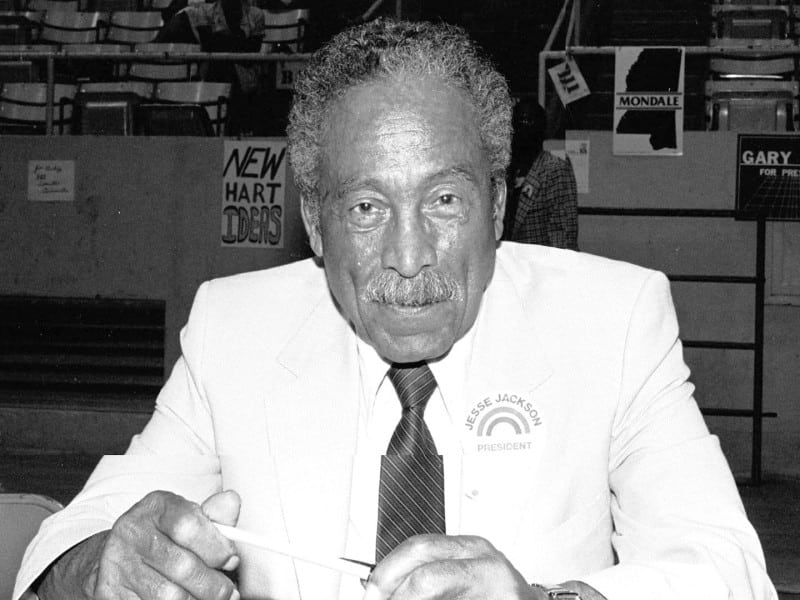
Mississippi labor leader Charlie Horhn was Congressman Bennie Thompson’s right-hand man for many years. Yet, his most notable achievements center around his efforts to form a union at the Presto Industries small appliance plant in Jackson, MS during the 1960s. “It happened after the 1964 Civil Rights Bill passed,” remembers Horhn. “The plant that I worked in did not have any Black females on the assembly line. They said that they couldn’t pass the aptitude test.” There were about 200 white and 200 Black workers in the plant, but, at the time, there weren’t many Black females there, if any.
In addition to gender discrimination, there was segregation still prevalent inside the plant. “We had separate restrooms at that time, so the company had to take the white and Colored signs off the restroom doors. So, we decided, well, we’re going to integrate this plant. A group of Black men on the midnight shift decided they would go into the former white men’s restroom. They were chased out of the restroom with pipes and hammers. The day shift heard about it, so we organized a group on the day shift to go in that same restroom. And we did. That prompted a walk out of the white people in that plant.
“The plant felt like they had to call a meeting with the whites and Blacks to squelch out the race problems that they saw happening in the plant.
The men ended up going back to work but the company decided to form an interracial committee in the plant. And of course, Charlie Horhn was selected to be a part of the committee. He not only joined, but he was singled out as the leader of the group. One of their first challenges was increasing the amount of Black women working for the plant. The company told the committee that out of 300 Black women who interviewed for the job, only nine had passed the test. Horhn knew that something was amiss and it prompted him to reach out to the white and Black plant workers alike to see if they would be interested in forming a union.
“That’s how I got involved with the union. I got to be the chairman of the organizing committee for the whole plant. My Black co-workers thought I was crazy. The union organizer told me, ‘You got to come out front because that’s the only way we’re going to be able to protect you. Otherwise, they’re going to fight you and claim that they didn’t know you were for the union.’”
Horhn did initially face opposition from both the company and from his co-workers. But he pressed on and after three years of working to form a union, it became a reality. Horhn cited that a lot of their support came from the Black females that began to get hired on at the plant. “It took us three years because the company appealed every decision that the labor board made. We went all the way to the Supreme Court, and the union was voted in [in] 1967. We went to the bargaining table in 1970 and got our first contract.
Charlie Horhn served as chief organizer, chief steward, and vice president during the first three years of the union. And he served as president the next three years. He then learned another valuable lesson. “I learned real quick that even though we had the union in the plant, if we didn’t get involved in politics, the things we negotiated, the bargaining table, could be taken away by bad elected officials who were anti-union. So, that’s why we had to get involved in the political arena. I first learned about A. Philip Randolph before we got the union contract. So, in 1972, I helped set up the first A. Philip Randolph chapter in Mississippi.” Through the A. Philip Randolph Institute (APRI), Horhn and others helped educate the community on the political candidates that would look out for their best interests.
Author