Brett Favre did not reveal to Congress all his known links to 2020 TANF scandal
ACLU’s Dortch calls Mississippi welfare system ‘punitive’
Retired NFL quarterback Brett Favre testified before Congress on September 24 that he had never heard of the 28-year-old Temporary Assistance for Needy Families (TANF) program before Mississippi State Auditor Shad White publicly accused him of receiving $1.1 million in TANF welfare money for speeches he never gave.
“When this (TANF scandal) started, I didn’t know what TANF was,” Favre told the House Ways and Means Committee. “Now I know TANF is one of the country’s most important welfare programs to help people in need.”
Congress created the TANF program in 1996 to replace Aid to Families with Dependent Children (AFDC). AFDC was an entitlement program guaranteeing benefits to all recipients with income and resources at or below state-determined “poverty” eligibility levels. TANF works through a block grant to the states.
Lingering questions about the 2020 TANF excesses in Mississippi still remaining unresolved prompted the Congressional Ways and Means Committee to hold its investigation hearing last week, according to Committee Chair Jason Smith (Rep.-MO).
Favre has been depicted by many media outlets as a wealthy man who sought to use public money to make good on his promised contributions of his own money to a number of different causes.
The Republican-dominated House Ways and Means Committee called on the former football professional as “an expert witness” to offer his opinion on the status and future of the nation’s largest welfare program ever legislated. It was embraced and implemented in 1996 by the Clinton Administration.
Committee Democrats, however, posed hard questions about Favre’s presumed expertise in such programs, and asked him why he should be considered an expert on welfare programs he claims to have never heard of until he was named as a suspect in the Mississippi scandal.
California Representative Linda Sanchez reviewed Favre’s role in obtaining more than $8 million in TANF money for projects in which he was involved, including $1.1 million for speeches he never gave, $5 million in TANF money to build a volleyball court at the University of Southern Mississippi in 2017, and $1.7 million of TANF money for a startup company called Prevacus.
Although he repaid the $1.1 million speech money under pressure from the state auditor, Favre has never paid interest on that money, an amount exceeding $700,000 today.
When asked by Sanchez if he had paid the interest on the money he had received for undelivered speeches, Favre replied simply, “No, I have not.”
And how did he justify accumulating such a large swatch of public welfare money?
“I thought it was grant money,” he said to committee members who had shown their concern.
DORTCH DISAGREES
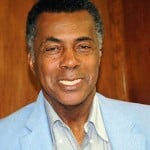
Sanchez then turned to ACLU Mississippi Executive Director Jarvis Dortch, referring to him as “an expert” on the welfare issue, and asked, “How do you think families were directly affected by years of bad or negligent actors who misused those funds?”
Dortch responded: “Mississippi has a history of making it hard for people to access benefits they’re entitled to. What you see with TANF is a lot of people (who) don’t even try. They give up. They don’t think this program is going to assist them. If anything, they think they can get in trouble by trying to get assistance from this program.”
State welfare programs in Mississippi are too frequently used for punishing people who need their services, Dortch said.
By way of contrast, he said, an autonomous program like the Magnolia Mothers’ Trust demonstrates how a support system should work. Cash assistance given to the mothers in the program helps buy groceries, provides for children’s needs, allows the mothers the space to breathe, to apply for a school program, or to look for a different job.
“They aren’t so pressured in life to make ends meet when they can’t make those ends meet,” said Dortch. “There are too many people in our state who are lacking the resources and seeing millions going out the window and not helping anyone. It’s really frustrating.”
Mississippi Department of Human Services (MDHS) rejected most of the applications for TANF cash assistance up through 2021. In 2012, the first year of former Governor Phil Bryant’s administration, the state’s TANF approval rate dropped from 35% to 2.8%. In 2015, only 190 adult applications for cash assistance were approved.
“Mississippi’s TANF cash assistance application approval rate was 7.1% and its denial rate was 92.8% in 2021,” said Dortch.
The TANF scandal reached its high point in 2019-20, but the state officials in both the legislature and the governor’s administration have been slow to act to correct the problems.
“Nearly five years later little has changed,” Dortch pointed out. “Zero hearings in Mississippi legislature on TANF. Ignoring the embezzlement of millions of dollars, lawmakers went after TANF recipients who received at most $170 a month. Just weeks after the arrests the legislature passed a deal in the state to audit the tax returns of the families that received TANF and other public benefits.
“There should not be any point in time when a state, so soaked in poverty, can have a TANF caseload of just 140 adults,” Dortch said.
Dortch urges Congress to “create a TANF ombudsman program with a watchdog that has teeth.”
BRYANT AND REEVES
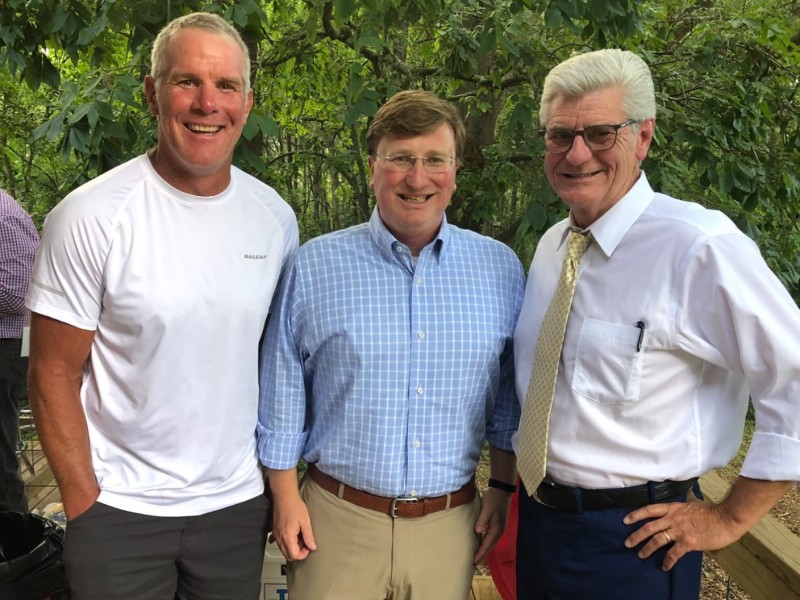
Favre did not set out on this venture into this TANF cornucopia alone. He had friends in the highest places in Mississippi, namely former Governor Phil Bryant and current Governor Tate Reeves.
Ultra conservative Republican Governor Kirk Fordice, elected in 1991, was Mississippi’s first Republican governor since the Reconstruction era. He resented government welfare programs and all aspects of equal opportunity and affirmative action, as he frequently made it known via different platforms and media.
“Fordice is known for the vehemence of his anti-government views,” the New York Times reported on October 16, 1997. “And with Black families making up more than 80 percent of the caseload, the (proposed) welfare reductions inevitably remind critics of the state’s difficult racial past.”
“Fordice and the leaders of his Department of Human Services (MDHS) believe strongly that the government should use punitive measures to change the behavior of welfare recipients,” said the Times. “They put together a ‘Work First’ program and ran it like a boot camp or prison.”
In 1995, Fordice appointed the stern disciplinarian retired Lt. Col. Don Taylor as MDHS director. In 1996, he appointed Phil Bryant, his “best friend” in the state legislature, to the then-vacant State Auditor’s Office.
Fordice said he believed young Black mothers in Mississippi deliberately got pregnant to collect $24 a month in extra welfare benefits. He called for limiting welfare benefits to two years, the Times said. Another motive for kicking people off the welfare rolls was that when the state reduced the number of TANF recipients, that money could be used for other purposes.
“Almost all the Delta’s recipients are Black, and most businesses are run by whites.” The Times said in October 1997.
Under the “Work First” notion, the state would “seize welfare and food stamp benefits from recipients and offer them as subsidies to employers who hire the recipients.”
“Mothers with children over 3 years of age are required to participate,” it was reported. These mothers were required to accept any position they were offered.
“If they refuse to participate, they and their children are removed from the welfare rolls,” the Times reported. “After six months, the state’s subsidy ends and employers are expected to hire the welfare recipients permanently. If they do not, the state seeks another.”
MONEY GAMES
Mississippi Today, a companion publication with The Jackson Advocate in the National Trust for Local News, published the contents of thousands of pages of text messages and emails. These documents show the close association of the governor’s office, under Phil Bryant and Tate Reeves, with the confessed embezzler and fraud perpetrator Nancy New and her two main organizations, the nonprofit Mississippi Community Education Center called (MCEC) and the anti-poverty agency she ran as Families First for Mississippi, MDHS, and a number of athletes including Brett Favre, Ted DeBiase, Sr. and Junior, and fitness guru Paul Lacoste, who received millions of dollars from the TANF money sent to the state from Washington.
Later investigations showed MDHS gave more than $98 million to Nancy New’s MCEC and the Family Resource Center of North Mississippi – all from the TANF welfare funds.
The history of TANF in Mississippi has Phil Bryant’s footprints deeply embedded therein from the very beginning in 1996 till his last days as governor. Bryant can arguably be called the architect of Mississippi’s TANF program.
Taylor retired from DHS in 2008 after serving two distinct terms – 1995-2000 under Fordice, and 2004-2008 under Haley Barbour.
Bryant, however, would remain tethered to Fordice’s “punitive” TANF program for most of the following quarter-century – three terms as State Auditor (1996-2007), one term as Lieutenant Governor (2008-2011), and two terms as Governor (2012-2019).
The content of several texts and messages show that Bryant taught Favre how to write a funding proposal so that it would be acceptable to MDHS, some months after former director John Davis had been terminated for his role in fraud and embezzlement schemes in MDHS.
“Just left Brett Favre,” Bryant wrote to Nancy New in July of 2019. “Can we help him with his project. We should meet soon to see how I can make sure we keep your projects on course.”
When Favre asked Bryant how the new agency director might affect their plans to fund the volleyball stadium, Bryant assured him, “I will handle that… long story but had to make a change. But I will call Nancy and see what it will take.” Favre forwarded this text to New, according to CBS News.
On Reeves, Mississippi Today says, “Reeves was apparently eager to please Favre. When Favre asked Reeves to appoint a former classmate of his to the Mississippi Board of Chiropractic Examiners, the new governor readily agreed,” according to texts Mississippi Today retrieved through a public records request. In the same text on Feb. 5, 2020, Favre said he and his wife, Deanna, wanted to show Reeves the volleyball facility, “And it would only be us. I want you to see what your (sic) trying to help me for,” the message to Reeves ended.
FAVRE MAKES HIS MOVE
The limited number of welfare recipients allowed into the TANF program were under strict orders and scrutiny, and were forced to conform to state rules or face possible jail time or expulsion from the program for the least infraction.
CBS News provided documented evidence showing Favre held the first investor’s meeting for Prevacus, the medical startup, at his home in January 2019. Favre played host to a group that included Mississippi officials and potential investors, where Prevacus CEO Jacob VanLandingham solicited nearly $2 million in state welfare funds, according to the CBS News review of the TANF scandal that was broadcast on October11, 2022.
A document distributed at the January 2, 2019, meeting “described plans to secure money from the state’s Department of Human Services, which operates Mississippi’s welfare program,” the CBS report said. The attempt to raise cash for a for-profit business venture with money from a state’s welfare fund was exceedingly “egregious” to Mississippi native Brad Pigott, the lead investigator into the TANF scandal before Reeves and new MDHS director Robert G. “Bob” Anderson fired him.
The agreement between the state and Prevacus, said Pigott, “was an egregious betrayal, both of the poor and of the law.”
Favre apparently was aware of the inappropriateness of him receiving this revenue stream from Nancy New’s operations, with the blessings and reassurances from then-Governor Bryant.
Favre wrote to Nancy New in August 2017 about his concerns regarding media publicity.
“If you were to pay me, is there anyway the media can find out where it came from and how much?” Favre wrote to New at 6:26 p.m. on August 3, 2017.
“No, we never have had that information publicized,” New reassured Favre in her response less than an hour later that same day. “I understand you being uneasy about this though.”
The next day, New texted Favre with an update: “Wow, just got off the phone with Phil Bryant! He is on board with us! We will get this done!”
Favre also wrote to Bryant about his concern over whether incoming governor Tate Reeves was on board with their activities.
At 10:20 a.m., February 6, 2020, Favre asked Bryant: “Governor, have you spoken to Tate? He said he was gonna get with his team and figure something out.”
Very soon after Bryant’s term as governor was over, he got down to business with Prevacus’ VanLandingham, who contacted him in mid-January.
“Now that you’re unemployed I’d like to give you a company package for all your help,” VanLandingham texted Bryant on January 16, 2020. “We want and need you on our team!!!”
“Sounds good,” responded Bryant, who had his own future business plans in mind. “Where would be the best place to meet? I am now going to get on it hard.”
LAWSUITS GALORE
State Auditor White filed court papers on February 5, 2024, calling for Favre to pay the nearly $730,000 in interest on the state welfare money that White says was improperly spent on projects backed by the retired football player. The interest amount on the $1.1 million speech money has now increased to $730,000 from the $228,000 reported in the first stage of litigation.
Favre filed lawsuits in February 2023 against White and national sportscasters Shannon Sharpe and Pat McAfee for allegedly defaming him in on-air discussions connecting him to the welfare misspending in Mississippi.
Favre recently lost in the case against Sharpe. And even though he appealed the decision, the U.S. Court of Appeals for the 5th Circuit rejected Favre’s appeal on Monday, September 16. The ruling said Sharpe’s comments were constitutionally protected opinions based on publicly known facts.
As of Monday, September 30, Favre’s lawsuit against Shad White is ongoing and Favre’s lawyers sought to expand this suit because of alleged defamatory statements found in White’s new book, “Mississippi Swindle: Brett Favre and the Welfare Scandal that Shocked America.”
In his third lawsuit Favre accused former NFL player Pat McAfee of using “outrageous falsehoods” in characterizing Favre as a “thief stealing from poor people in Mississippi.” Favre dropped his lawsuit against McAfee in May 2023 after McAfee apologized for saying the offending statements.
In another court proceeding, Mississippi Judge Faye Peterson on July 11 filed an action to remove one of Favre’s attorneys, Daniel Koevary, for violating state court procedures.
“It appeared that information obtained in discovery seemed to be used as a tactic to embarrass and bring scrutiny upon third parties who were not in the action for reasons this court could not fathom,” Peterson wrote in her decision.
During his investigation for MDHS, Pigott, a former U.S. attorney, reviewed the state audit in 2020 that had found $94 million in federal welfare funds may have been misspent in Mississippi instead of going to poor families.
A few days before his firing, Pigott drafted a lawsuit on the agency’s behalf seeking the return of more than $20 million from 38 entities and people, including Favre. He also issued a subpoena directed at USM’s athletic foundation. The subpoena asks for documents connected to the funding of the volleyball building.
Robert G. “Bob” Anderson, the new executive director of MDHS, said, “Pigott had been relieved of his duties because he filed the subpoena without consulting with the agency first.” But Mississippi Today located an email showing Pigott had sent a draft copy to the agency’s lawyer and the state attorney general’s office 10 days before he issued it.
Shelby Wilcher, a spokeswoman for Governor Reeves, said there were “many capable lawyers who can handle the work necessary to recover stolen TANF funds,” and that Pigott’s one-year contract was about to expire. “It was decided that a semiretired solo practitioner was not the right person to sign on for more work,” said Wilcher.
GUILTY PLEAS
On February 5, 2020, Auditor Shad White and Hinds County District Attorney Jody Owens announced the indictments of John Davis, Nancy New, Zach New, Brett DiBiase, MCEC Accountant Anne McGrew, and former MDHS employee Latimer Smith on “a range of violations involving fraud and embezzlement.” All six would initially plead not guilty. They would change their pleas to guilty later on, however.
On May 9, 2022, MDHS announced that the State had filed a massive civil lawsuit against 38 people or entities involved in the sprawling welfare fraud scandal in an effort to recoup the misspent funds. Those targeted included Brett Favre, John Davis, Nancy New, Zach New, the DiBiases (father and sons), and New’s nonprofit MCEC, along with her two sons involved with her projects.
Sports Illustrated reports in its May 18, 2023, edition: “Favre managed to direct $8.3 million of welfare funds to his projects, a greater sum so far than anyone else involved in the sprawling scandal. Interviews and an analysis of legal filings and records, which include dozens of text conversations…paint Favre as a ringleader from start to finish.”
Pigott, the state-appointed investigator, also claimed Favre’s demand for money was the crucial factor in implementing the questionable money shenanigans from the very beginning.
“Brett Favre’s repeated demands for this grant money were certainly the driving force,” he said. Pigott had been hired by Tate Reeves to independently investigate the scandal – until Pigott started looking at the $5 million volleyball deal at USM. Then Reeves fired him.
Author