As Dr. John Peoples turns 96, Jacksonians continue to benefit from his presidency
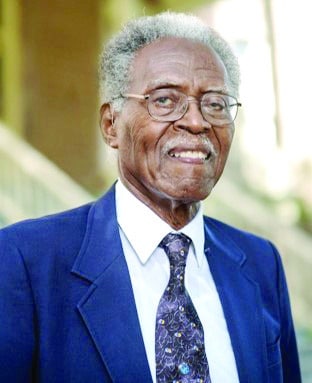
August 26, 2022 marks the 96th birthday of Dr. John Peoples. Thousands of well-wishers have been joining in to note the event. Indeed, our hat is off to Dr. Hilliard Lackey for encouraging Jacksonians to honor him with messages and postings on Facebook.
It is fortunate that Peoples’ accomplishments while president of Jackson State University have not been forgotten, for they were monumental. While the college board did not appreciate his efforts at the time, he has become legendary in the history of Jackson State University as well as in the development of historically Black colleges and universities around the country.
During his tenure as president of Jackson State University, from 1967-1984, he served as the director of the American Association of Higher Education, a committee member of the National Endowment for the Humanities, and as the first African American chairman and director of the American Council on Education. He was also inducted into the Jackson State University Hall of Fame and the South Western Athletic Conference Hall of Fame and received the National Black College Hall of Fame Lifetime Achievement Award. All of these were well-deserved accolades.
Aside from those honors and awards, people who were either at Jackson State University during that time period or who have studied the institution’s history, realize that there is much more to be celebrated in terms of Peoples’ accomplishments on the campus. These we discuss herein, but not necessarily in chronological order.
FACULTY UPGRADE. Establishing agreements with other universities and utilizing grants, fellowships, and other forms of assistance, Dr. Peoples began an accelerated effort to increase the number of faculty with earned doctoral degrees. Many young faculty members went off to other universities to study with an agreement that they would return to JSU to teach. As a consequence of that effort, in less than 20 years the faculty with terminal degrees increased from less than 10% to more than 80%.
CURRICULUM REVISIONS. Numerous curriculum revisions were made which underscored the college’s new motto, “You shall know the truth and the truth will make you free.” They were also noteworthy through the creation of the Institute for the Study of the Life, History and Culture of Black People and the Thirteen Colleges Curriculum Program, both of which he enthusiastically supported.
STUDENT ENROLLMENT. Based partially in an effort to increase state funding, Peoples led an effort that took the college’s enrollment from just above 2,000 to nearly 9,000. The tremendous jump in enrollment at Jackson State prompted the college board to begin counting enrollment in terms of 12-hour, full-time equivalencies rather than headcount. It also prompted changes in the funding formula for the colleges. Jackson State, nevertheless, continued to grow.
FREE SPEECH. Many people were surprised at the manner in which President Peoples promoted freedom of speech on campus. In particular, although presidential permission was still required under college board policies, Stokely Carmichael, who was anathema on many campuses, was permitted to speak at Jackson State. Many others, including students, faculty, and civil rights advocates, also spoke on the campus, a far cry from what had been the case a few years earlier. Black power advocates, Black Muslims, New Afrikans, and the like, freely distributed literature, recruited, and organized on the campus.
STUDENT GOVERNMENT ASSOCIATION, FACULTY SENATE, AND ALUMNI ASSOCIATION. Just five years before Peoples became president, the Student Government Association (SGA) had been suspended and then severely restricted due to its protest organizing. Peoples came to office and greatly encouraged the SGA, having served in the SGA as a student. Similarly, he encouraged faculty political activities, approving the formation of the first Faculty Senate. It was the first such body on the campus at Jackson State, Alcorn, or Mississippi Vocational College. Finally, although there had long been a Jackson State University National Alumni Association (JSUNAA), Peoples gave it more visibility and a greater partnership role with the administration, faculty, and students. Although not verbalized in that manner, those three bodies – SGA, JSUNAA, and Faculty Senate – could and often did go a long way to serve as buffers for and partners with the president in his innovative efforts.
BLACK COLLEGE PRESIDENTS AT COLLEGE BOARD MEETINGS. At the time that Peoples was appointed president, the Black college presidents did not attend college board meetings. He was able to secure the support of the presidents of Alcorn and Mississippi Vocational College to seek permission to attend the meetings as was being done by the white college presidents. From that point forward, the meetings were more open to the public as well. The public can be appreciative of this change because prior to Peoples’ organizing efforts, anytime a faculty member even visited the college board office, even if it was just to seek information, the college board staff member on duty would call to the Black campus to notify the office of the president, with the understanding that the president would curtail such actions in the future.
MASSACRE OF 1970. Peoples was not just concerned about the safety of the students when the shooting occurred. In a meeting with the college family, he clearly stated that for that massacre “somebody has got to pay.” This was the sentiment of Black people across the state and country. Then as pressure mounted to move the college, Peoples stood his ground. He opposed not just the idea of having the campus moved out of town, he also opposed it becoming a part of a larger university system, controlled by a white chancellor.
AYERS CASE LITIGATION. When Isiah Madison and other Black attorneys filed the Ayers vs. Waller lawsuit, Peoples fully cooperated with the plaintiffs’ lawyers, providing critical data and ideas. As a consequence, the state’s lawyers moved to have the Black college presidents declared to be defendants rather than plaintiffs in the case.
NCATE ACCREDITATION FOR ITS EDUCATION PROGRAMS. Under Peoples, Jackson State became the first education program in the state to gain accreditation from the National Council for Accreditation of Teacher Education. It was followed by Mississippi State University a few minutes later. Based upon the strength of those education programs, JSU went on to become number one in the country in the production of teacher educators.
THE URBAN UNIVERSITY. When Congress passed legislation creating “urban” university funds, Dr. Peoples moved to have the college board declare Jackson State University as the state’s urban university. This would enable it to receive such funds. The state followed through labeling it as the state’s urban university, but obstructed attempts to provide additional funding to JSU.
DOCTORAL DEGREES IN URBAN STUDIES. Based upon its tremendous growth and its designation as the urban university, Peoples sought to have the college board grant permission to offer a doctoral degree, at least in Urban Studies. Only years later, under the pressure of the Ayers litigation, was JSU granted permission to offer doctoral degrees.
Most of these efforts on the part of President Peoples were opposed by the college board or other white education leaders. The initiatives were opposed because they were deemed to be too progressive in an environment that was racially conservative, to say the least.
Together, those initiatives helped propel JSU – and to some extent Black college education in general – to the forefront. Many of them were occurring without a great deal of fanfare, so much so until they almost went without notice by many people on the campus. The college board was noticing, nevertheless.
Peoples’ success as a legendary Black university president can be clearly understood by the fact that he was summarily fired by a racist board. He was not even permitted to have his name on the diplomas of the JSU students graduating in May of 1984. Not only that, it is reported that the board made a pledge that it would never appoint another alumnus to head a Black college in the state. That pledge was not broken at JSU until Thomas Hudson was appointed president in November 2020, 36 years later. Further testimony to Peoples’ legendary stature can be seen in the fact after he was appointed president in 2000, President Ronald Mason frequently sought to garner support among faculty and alumni by saying that he was “the second coming of President John Peoples.”
As John Peoples’ birthday comes and goes, those of us who early on benefitted and those who continue to benefit from his initiatives should be sure to honor the man and encourage current education leaders to learn from him and do likewise for the benefit of those whom they lead and teach.
Author