Russia’s invasion of Ukraine keeps the world in a quandary
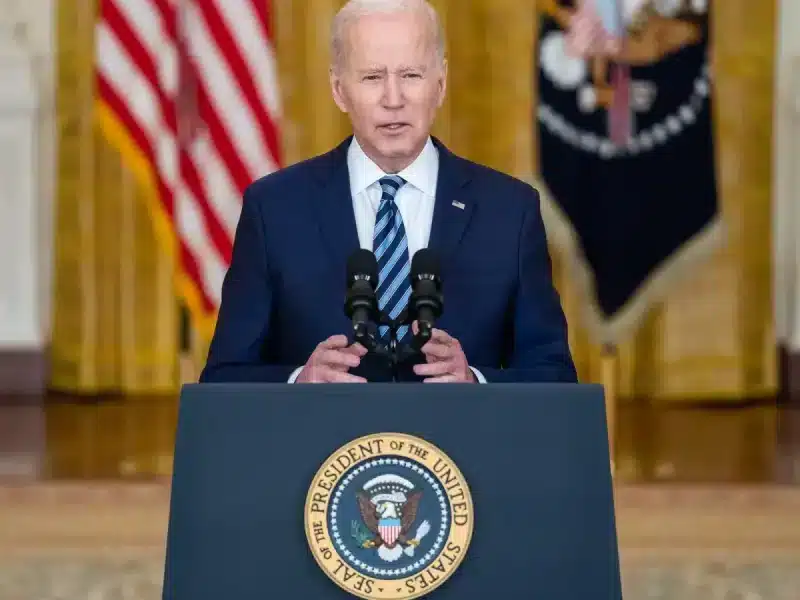
For several months, U.S. President Joe Biden predicted and warned the world of Russia’s impending invasion of Ukraine. Tanks and troops were lined up on Ukraine’s borders; Russian President Vladimir Putin had expressed his opposition to Ukraine’s desire to join the North Atlantic Treaty Organization (NATO); Putin desired to annex portions of Ukraine where Russian-speaking citizens were in the majority; and he desired to have a ruler in Ukraine who was an ally, if not a puppet, to Russia. President Biden knew all of this and listened to his advisors. His warning and prediction were thus based upon American intelligence sources. With hindsight, one can see that Biden was particularly accurate. The task had been a somewhat easy one given what had been reported to him.
It has not been nearly as easy, however, to decide what to do now that the Russian forces have spread over much of the country of Ukraine. The United States, NATO, the European Union (EU), and the United Nations (UN) have all expressed horror at what is happening, but none have offered to commit any soldiers, which would be most helpful.
Weapons have been sent. Money has been sent. Refugees have been provided assistance, including shelter. Even heavy sanctions have been enacted against Russia by many countries and companies. The truth is that many countries the world over, in one way or another, have signaled that they stand with the Ukrainian people. In the most critical manner, however, which comes in the form of physical military presence, Ukraine has had to stand alone. In that sense, Russia’s invasion has left the world in a quandary.
NATO has indicated that it cannot currently admit Ukraine to membership based upon its membership criteria. And since it is not a member, NATO cannot provide the direct military aid that would go to its members. The USA has remained on the sidelines in order to not have the war spread further or become a nuclear confrontation. Other countries also fear the military consequences from getting involved. And more so, they fear the political fallout from their citizens if they commit soldiers to the war. The United Nations has been stymied because Russia, being one of the big five on the Security Council, has the power to block military action and has thus done just that.
In the meantime, the major cities of Ukraine have been fairly well-surrounded and are being slowly crushed from artillery fire, armored vehicles on the ground, and air strikes. Many military experts think that it is only a matter of time, and a short time at that, before the country is overrun, the government is toppled and perhaps its leaders are captured and/or killed. Millions of Ukrainians have already fled the country and millions more are seeking to do the same. Of those left behind, there will perhaps soon be too little food, water, and medicine for survival. With electrical power being crippled and the internet disrupted, lack of communication will add to the probable defeat of the Ukrainian military.
The press tries to be optimistic and praise the courage of the Ukrainians, but the situation is tragic. It is like the world is watching a bad movie. In their minds, the rest of mankind is seemingly pondering two undesirable options – the slow death of a country that clearly seeks to become a Western European-style democracy or the rapid descent of the war into a worldwide nuclear confrontation. The leaders of the world are thus in a quandary. They are rooting for Ukraine, but do not want to help usher in World War III.
Even as this situation unfolds, many people are troubled by at least three other realities that cannot or should not be ignored. The first is that racism has raised its head as Africans face discrimination in trying to get out of Ukraine and as the Ukrainian crisis gains the world’s attention while other crises in Africa, past and present, go relatively unnoticed by the international media. Africa and African people cannot be expected to always accept such second-class treatment.
Secondly, there is the question, “If Russia is successful in taking control of Ukraine, what will be Putin’s next move on the world scene?” Can the world expect more similar invasions since much of the rest of the world is stymied by fear of a nuclear war with Russia? That calculation might create another quandary for the west, especially, the USA and Western Europe.
Thirdly, there is the question of whether the sanctions and/or internal upheavals in Russia will lead to the end of Vladimir Putin as a war-monger? If so, will that put an end to the quandaries? Or, will new ones emerge?
These are questions that many leaders and thinkers ponder. In light of them, African people around the world, including African Americans, must prepare themselves for greater liberation and self-determination no matter how the world turns. Rather than being pawns of European leaders and awaiting yet another quandary of their making, Africans must become willing and able to stand strong in African pride and for world peace and human rights.
Author