
JSU Class of ‘70 finally receives just reward
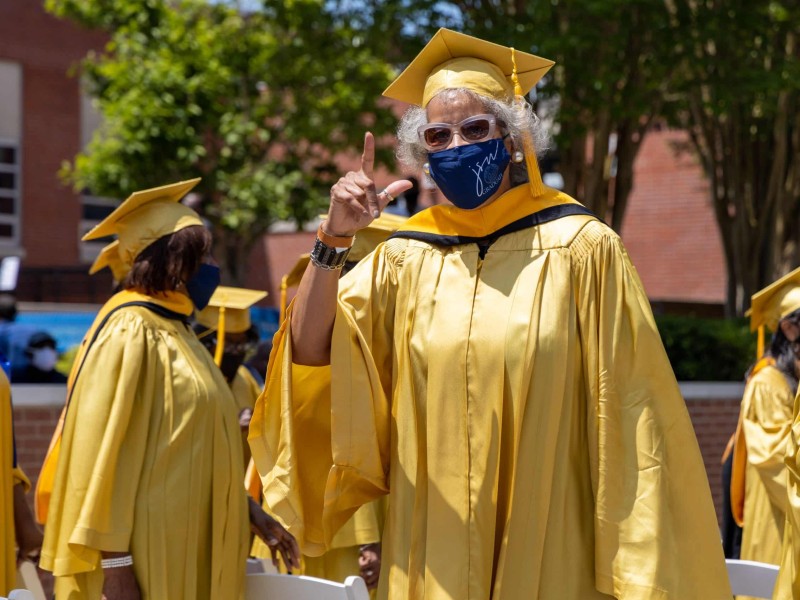
Saturday, May 15, 2021, between 10 a.m. and 12 noon, nearly 80 members of the JSU Class of 1970 participated in their first commencement exercise. It was held on the Gibbs-Green Memorial Plaza and in conjunction with the commemoration of the 1970 mas-sacre carried out by Jackson City Police and the Mississippi Highway Patrol.
By Ivory Phillips
JA Contributing Editor
This past Saturday, between 10 a.m. and 12 noon, nearly 80 members of the JSU Class of 1970 participated in their first commencement exercise. It was held on the Gibbs-Green Memorial Plaza and in conjunction with the commemoration of the 1970 mas-sacre carried out by Jackson City Police and the Mississippi Highway Patrol.
At that time, the college was closed and student diplomas were mailed rather than there being a graduation ceremony. Now, 51 years later, the students were invited to return for a commencement exercise.
The class of 1970, and several hun-dred supporters and spectators, were more than pleased that, although no one was ever convicted for the students killed and injured, the Mayor of Jackson, Chokwe Antar Lumumba, on behalf of the City of Jackson, issued an apology to those 1970 victims. Lumumba also offered the key to the city to the victim’s families. Com-ing at this time, it was symbolic, but deeply touching and highly appro-priate. Senator Hillman Frazier, on behalf of the State Senate, issued the same type of apology.
Later in the program, the murder victims, Phillip Gibbs and James Green, were presented Doctors of Humane Letters degrees. The degrees were accepted by their families. Again, while this was mostly symbolic, it does represent a real change for the city and the state. In those days, not only were there no Black officials at the city or state level, there were also no openly empathetic white leaders.
The speaker for the occasion was Dr. John Peoples, who was JSU president at the time of the massacre. He, too, shared his feelings regarding the events then and now.
Based upon conversations with members of the class, there is more to come in terms of keeping alive the memory of the class. For now, many are appre-ciative that a day of recognition such as that on Saturday, the 15th, took place in an eloquence ceremony at JSU.
Author