Human-to-Machine: The future of Black America is up to us
By BlackEconomics.org, LLC
Brooks Robinson, PhD
Founder and Chief Contributor
Introduction
This 2026 year is evaporating rapidly. The pace of time, change, and technology is accelerating. However, Black Americans’ (Afrodescendants’) socioeconomic position appears to experience little change; especially upward. This Analysis Brief considers summarily how Black Americans’ history unfolded; how our leadership, which experienced leadership problems (LPs), failed us with poor decision making mainly due to its failure to account for a key starting point problem (SPP); and then we use the foregoing as background for enquiring about Black Americans’ position on probably the most important and existential topic today: The move from H-M (Human to Machine).
History
The available history of Blacks in America (Afrodescendants) is well known. We can all recite without perfect accuracy our story as it is widely known: Arrival in America (1619); the ante bellum period; and post bellum periods that are demarcated by “Reconstruction,” and “Post Reconstruction” characterized by many subperiods. There is the onset of Jim Crow; our two Great Migrations north; the 1954 Brown vs. Board of Education, Topeka, Kansas Supreme Court Decision; the Civil Rights Movement of the 1960s; Integration and Affirmative Action (AA) during the 1970s; the 1978 Bakke Case that sought to unwind AA and all subsequent programs that were seemingly intended to enable special access to socioeconomic opportunities for Black Americans; the Crack Cocaine Epidemic and Rap Music as powerful culture shaping forces beginning in the late 1980s and early 1990s that also featured a demoralizing intense School-to-Prison-Pipeline era; our unexpected days in the sun in a “Post Racial America” under the “leadership” of Barack and Michelle Obama; and initial efforts to close the trapdoor on the rise of Black and other unwanted Americans that began with the first Trump Administration; a brief reprieve under the Biden Administration; and a final closing of the trapdoor for poor Black and other Americans under the second Trump Administration.
Logically, this history infers that, while we may agree that “great progress” was made for a people valued at “zero” at the Civil War’s conclusion (we have made more progress than any such people in the history of the world during a similar time duration), we remain generally locked out and excluded from the mainstream of all aspects of American life. At the same time, we are forced to conclude that this outcome exists in the face of rules and laws that should produce a totally different outcome.
Given this history, Black Americans should see that we cannot expect a revision of outcomes by continuing the methods used to address ongoing conditions. We should determine why methods adopted in the past to produce responses to our condition have failed us, and then formulate new response methods in the form of strategic plans (including alternative plans) on which most of us can agree. Once plans are initiated, we should adhere to them until they prove to be ineffective. Otherwise, we can adopt alternative plans or produce new strategies and continue our efforts to achieve the future goals that we established at the outset of this process.
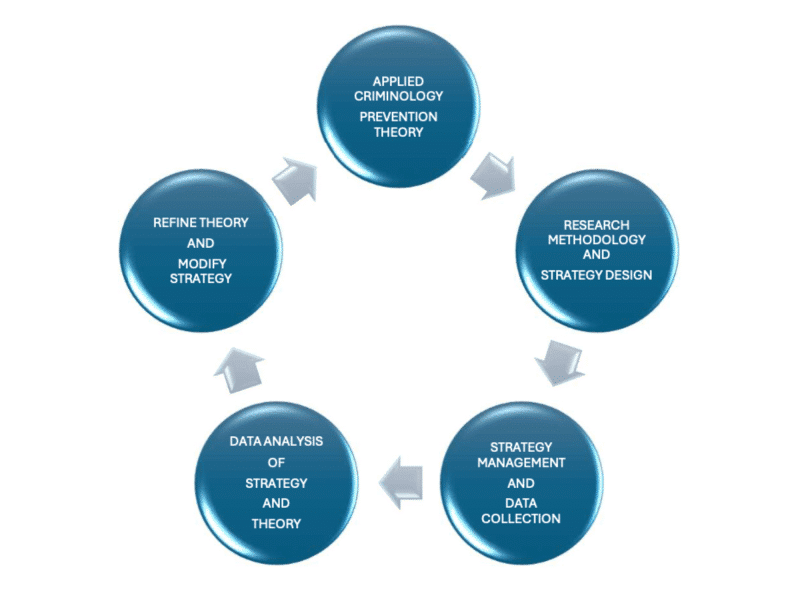
There is one very important caveat to that which is suggested above as a course that is expected to help us arrive at a self-reliant, self-determined, and a favorable state of liberty. We must be careful to a fault to ensure that our strategic plans are comprehensive (certainly in a general, if not a detailed, manner); systematic and logical; that they factor in course corrections and periodic opportunities to course adjust; that they produce regularly scheduled reporting of results and the issuance of rewards to the most dedicated and effective participants in the “journey” to Black America’s freedom. We take up a critical aspect of this caveat in the next section.
SPPs
By SPPs, we mean a “starting point problems.” Economists comprehend the nature and problems of SPPs. Simply stated, SPPs involve problems associated with identifying answers or solutions that are “local” rather than “global.” In other words, when econometrics (statistics for economists) is used to estimate solutions to problems using a nonlinear functional model and statistical data, more than one “correct” answer may be identified. Typically, there will be a “global” solution (i.e., a solution that represents an optimal outcome (a minimum or maximum) for the entire period reflected in the dataset). However, there may be one or more “local” solutions (i.e., solutions that represent optimal outcomes (minimums or maximums) for the entire period reflected in the dataset that are of lower value than the “global” optimal outcome).
How do SPPs figure into Black America’s drive for self-reliance, self-determination, and liberty? Expert theorists across almost all—if not all—fields agree that a fundamental key to success for those operating in any field of study or work is that they embody appropriate knowledge. In other words, those performing work must have the correct mindset/orientation and knowledge to perform at the highest possible level. What is clear is that most Black American development plans require training in fields for which production is to occur, and that training produces a mindset/orientation for that production. In fact, training to produce (i.e., to work) has not been a problem for Black Americans. Believe it or not, many Black American workers can serve as legitimate carriers of the title bestowed on the late and great performer James Brown; he was touted as “The hardest working man in show business.”
The conundrum is: If we are excellent producers (workers), then why are we so unsuccessful in closing socioeconomic gaps? We believe that key factors that temper or thwart Black American success in rising increasingly toward a self-reliant, self-determined, and independent/free position are not found in poor training or poor production skills. Rather, and for too many reasons to mention here, Black Americans’ success in achieving liberty is tempered or thwarted largely by an absence of a strong self- and group-concept and a deflated self-worth posture. In one of his most popular lectures entitled “The African Mind,” the late Prof. John Henrick Clarke states that Black immigrants outperform, but do not outwork, Black Americans on their way to success simply because they have confidence that inures from working at high-levels in public agencies and in private firms sans constant oversight from European Colonizers back in their home countries prior to migrating to the US.
In other words, if Black Americans are to rise and become successful in closing socioeconomic gaps, then we must see that we have a major SPP. That is, given our history in the US, it seems essential that before we train to produce (to work), we should take time to train ourselves to throw off vestiges of a slave mentality that have robbed us of our confidence and self-worth. To be successful in today’s ultra-competitive world, we need more than knowledge about how to produce in the most technologically efficient and proficient ways. We must have a winners’ mindset that says we are “better” than the rest because we have more than endured the most onerous of tests and have not only survived, but have thrived. Simply put, we must recognize our leadership problem (LP), which may be characterized by a lack of knowledge about a starting point problem (SPP). Leadership has rushed us to production, without preparing us to win using a mindset that says: We have more of a right to win, to be successful, than the rest because we are better prepared than the rest.
LP
The previous section explains how Black America’s leadership problem (LP)—a failure to plan our development properly due to failed recognition of a SPP—has contributed, no doubt, in significant ways to our failure to close socioeconomic gaps. It is important to note that Black America’s LPs are widespread. Since 2021, BlackEconomics.org has produced at least four submissions that highlight Black American leadership’s contributions to tempering or thwarting of efforts to rise and close socioeconomic gaps.
It goes without saying that all Black American leadership is not problematic. However, when we consider the “individual” success enjoyed by selected Black Americans, which is proof of our ability to be enormously successful, it is difficult to explain our “collective” failure to close socioeconomic gaps without pointing to Black American LPs. In addition to our recommendation that readers consider the four BlackEconomics.org submissions mentioned earlier, we specifically urge close scrutiny of “Reasons for Black American Leadership Failures” because it emphasizes that extant adverse aspects of the Black American status quo should not be attributed solely to Black American leaders. Factors beyond the control of Black American leaders should also be viewed as contributing integrally to the tempering or thwarting of Black Americans’ efforts to close socioeconomic gaps.
H-to-M
Successful analyses of problems that produce favorable solutions engender a powerful sense of wellbeing. We believe that a similar, but even more dramatic sense of elevated wellbeing will result when Black America realizes increasingly more self-reliant, self-determined, and independent conditions. Unfortunately, in today’s rapidly changing world, even such vaunted and welcomed outcomes are made less meaningful if they do not account for a rapidly evolving and, potentially, permanently transformative effort across the globe to incorporate artificial intelligence and robotization (in a word, cyborgism) into every aspect of our socioeconomic system.
In the limit, cyborgism is a transformative/evolutionary path from Human-to-Machine (H-to-M). Undoubtedly, there are numerous and well-substantiated arguments on both sides (positive and negative) of this topic. This Analysis Brief serves as a warning concerning the ongoing slow-walk and sleep-walk of our society to a point of no return on the H-to-M topic to a point where those who have no alternative plans must swallow hard, and only hope, pray, and accept the outcomes that unfold.
To the extent that we have not already begun to consider seriously the H-to-M topic, Black Americans and our leadership should begin to ask: Do we have a firm, researched, solid, and broad agreed position on the H-to-M topic? Culturally, are we not closely tied to the “natural,” and how does the H-to-M proposition fit with the “natural”?
What are the most salient of the wide-ranging implications of an H-to-M transformation? What are Black America’s alternatives to acceding to a world produced by H-to-M transformations and are these alternatives easily incorporated into our existing strategic plan? As these questions are researched and analyzed, Black American leaders should be certain to avoid creating another LP by avoiding a planning process and its related decisions that reflects an SPP.
Conclusion
This BlackEconomics.org Analysis Brief provides a clear analytical path concerning: (i) Black Americans’ history in the US; (ii) an explanation of concepts and terms that clarify why we have been unable to reduce substantially the socioeconomic gaps that we confront; and (iii) a warning concerning adverse outcomes that may unfold if we fail to act soon to develop strategic plans that elicit widespread agreement, support, and efforts toward implementing our strategic plans.
Importantly, the information presented in this brief makes it clear that Black American leadership efforts can be problematic (i.e., there are LPs). At the same time, we realize the largest such problems are those associated with an absence of knowledge. When absence of knowledge causes the production of misaligned plans, then prospects for SPPs arise, and the latter are known to prevent Black Americans from achieving important goals, including closing inequality gaps.