Tentative Agreement reached in Dr. Dawn Bishop McLin’s suit against JSU and the College Board
Last week, in a court session presided over by Federal District Judge Henry Wingate, lawyers representing Dr. Dawn Bishop McLin (Chad Welch), the College Board (Pope Mallett) and former JSU president Marcus Thompson (Carlos Tanner), announced they had reached a tentative settlement in the case of Dawn Bishop McLin vs. Jackson State University. The nature of the settlement is tentative because there was/were unsettled issue(s) still needing ed to be resolution or further clarification.
The matters in which there was clarity included: (1) in its June meeting the college board voted in executive session to re-instate Dr. McLin to her position at JSU rather than terminate her; (2) the monetary request of $48,000 plus attorney fees was reasonable; and (3) the case would be dismissed upon resolution of the undisclosed issue.
The joint decision, which was announced clearly, left Dr. Thompson on his own in having taken the action to place Dr. McLin on administrative leave and followed it up with a recommendation to terminate her. Although his lawyer indicated due process was provided in taking those actions, he agreed to the tentative settlement.
The case was filed by Dr. McLin as a result of Dr. Thompson placing her on administrative leave last Spring. Although, she was paid her regular salary, Dr. McLin reportedly lost $38,000 in grant money and $10,000 in lost income because she was not able to teach summer school. In addition to that, she alleged being threatened with the loss of employment for the upcoming year, violation of her free speech and tenure rights, and suffering humiliation and mental anguish.
After several hours of discussion in the court and behind- the- scene negotiations, lawyers for both Dr. McLin and the college board suggested that their differences were relatively minor and a final agreement could be reached in a matter of days. It created the impression, since Dr. Thompson was being sued personally, the stickler had to do with that part of the lawsuit.
Dr. McLin demonstrated her concern was more focused on returning to work at her beloved alma mater than punishing the system by seeking what appears to be the minimum damages – only the clearly loss wages from her grant and summer school employment rather than compensation for humiliation, mental anguish, and other damages.
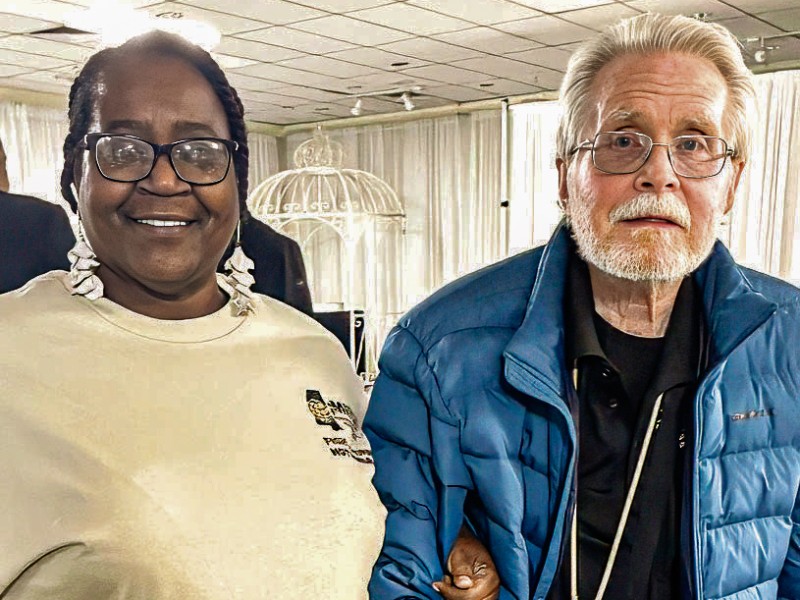
Through it all, she has been supported by her husband, Prentiss McLin, who was by her side during the court hearing. The same can be said regarding support from her parents B.V. and Carrine Bishop, both of whom graduated from Jackson State University.
As the final court session unfolds, it should be of public interest to learn (1) what was the major sticking point that caused the settlement on last week to be tentative and how it was resolved, (2) what the final monetary figure was and how much of it comes from the funds of each of the three parties – JSU, college board and Dr. Thompson, and (3) what item the lawyer for the college board wanted to keep confidential. (On that matter, Judge Wingate suggested that he would need to consult state law on such confidentiality since public funds are involved in the settlement. Attorney Mallett, in turn, indicated that in the past he has been able to keep these matters confidential.)
The case itself, and how it is resolved, can have major implications for how Jackson State University and the other historically Black colleges and universities will fare in terms of the resolution of personnel matters, how the college board will honor or respect the concepts of faculty tenure and shared governance, and how the principles of free speech and academic freedom will be treated on the university campuses.
Author